
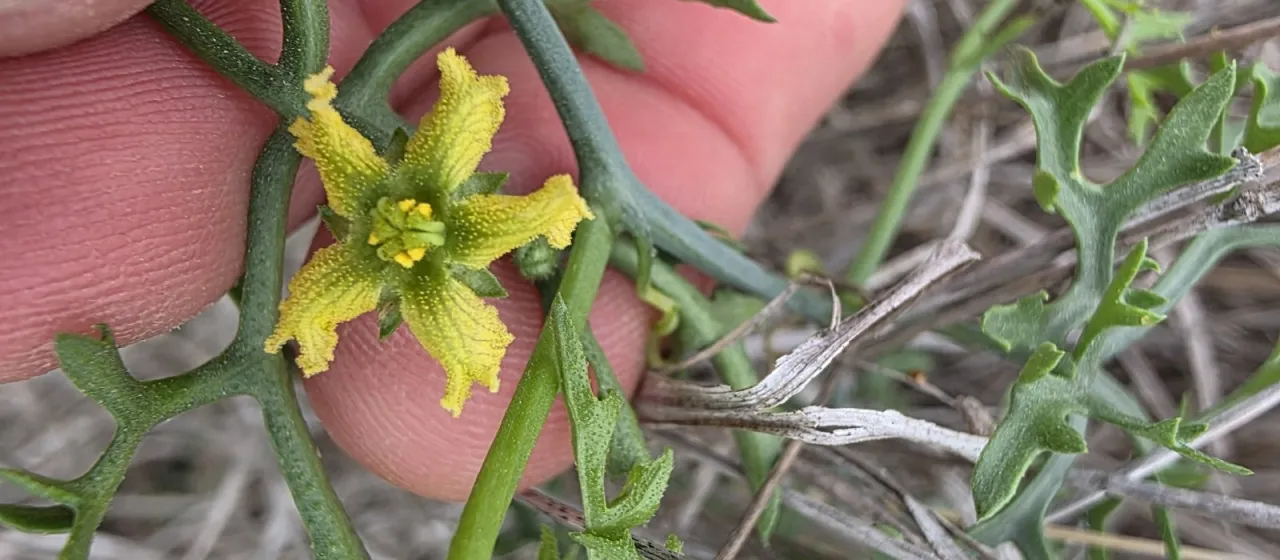
Description
Ibervillea tenuisecta is a perennial herb belonging to the Cucurbitaceae family. Unlike common agricultural crops of this family, this plant is notable for its massive, woody caudex, which serves as a vital water-storage organ, allowing the plant to thrive in arid and semi-arid environments.
The native range of this species is primarily focused on the southwestern United States, particularly Texas and Arizona, as well as northern Mexico. It typically grows in rocky habitats and scrublands, where it has developed significant resilience to extreme thermal fluctuations and water scarcity throughout the growing season.
Botanically, it is characterized by thin, climbing stems that emerge annually from the central caudex. The leaves are distinctively finely dissected, giving the plant an elegant, airy appearance. As a dioecious species, it requires male and female plants to facilitate pollination and fruit production, which manifest as small, berry-like red fruits.
Agrotechnical requirements prioritize excellent soil drainage, as the caudex is highly susceptible to rot if kept in soggy conditions. A sandy, gravel-based potting mix is essential. The plant requires abundant sunlight and warmth during its active growing cycle, while strict adherence to a winter dormancy period is necessary to ensure long-term health and seasonal regrowth.
In terms of хозяйственное (economic) utility, the species is mostly appreciated for its ornamental value in specialty collections and its physiological importance as a model for drought adaptation. Common issues that growers may face include:
- Caudex rot resulting from overwatering during the growing season.
- Spider mite infestations that thrive in dry, indoor environments.
- Powdery mildew if air circulation is insufficient.
- Root decay caused by poor drainage or overly dense soil substrates.