
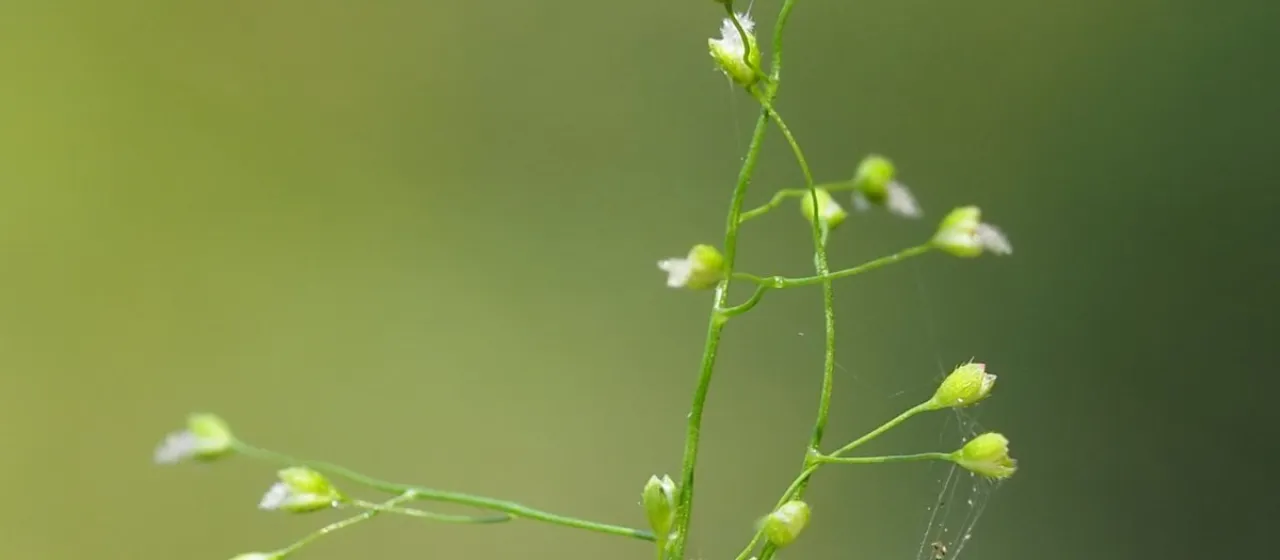
Description
Isachne pauciflora is a perennial herbaceous plant belonging to the grass family (Poaceae). This species is a notable member of the Isachne genus, known for its distinct spikelet structure and ecological adaptation to specific humid environments. It is a plant that exemplifies the diversity of tropical graminoids found in Asian ecosystems.
The native distribution of Isachne pauciflora is primarily situated within tropical and subtropical regions of Asia. It is typically found in wetlands, swampy terrains, and alongside stream banks where moisture is consistent throughout the year. Its ecological role is significant as a component of wet grassland habitats, providing structure and biomass to these environments.
Botanically, the plant presents with slender, often creeping stems that can root at the nodes, forming loose mats. The leaf blades are narrow and linear, common to many grasses, possessing a soft texture. The inflorescence is a panicle characterized by a low number of spikelets per branch, which gives the plant its scientific name, denoting its sparsely flowered appearance.
Cultivation requirements for this species are strictly tied to high water availability and stable temperatures. It thrives in soils that remain moist but have sufficient aeration to prevent root decay. In a managed environment, it requires full to partial sun exposure and benefits from soils with moderate to high organic matter content, mimicking its native riparian habitats.
From an agricultural standpoint, Isachne pauciflora serves primarily as a forage resource for livestock in its native regions. While not a major commercial crop, it is valuable in integrated grazing systems. Growers should be wary of common grass-related pathogens, particularly fungal blights that may emerge during prolonged periods of high humidity and poor air circulation within the canopy.
- Family: Poaceae
- Plant type: Perennial herb
- Water requirements: High
- Distribution: Tropical Asia
- Primary use: Forage and pasture