Kalanchoe marmorata
Kalanchoe marmorata Baker
Description
Kalanchoe marmorata, also known as the Penwiper plant, is a succulent species within the Crassulaceae family. Widely recognized for its striking appearance, it serves as a prominent ornamental crop in arid-climate landscaping and as a highly sought-after houseplant globally.
The species originates from the high-altitude regions of East Africa, specifically Ethiopia and Sudan. Its native habitat consists of rocky slopes and crevices, which has biologically prepared the plant to thrive in nutrient-poor substrates and endure significant fluctuations in temperature and solar radiation levels.
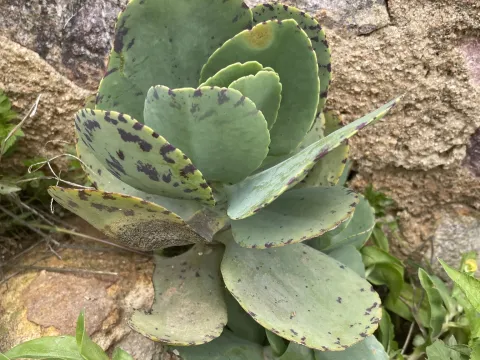
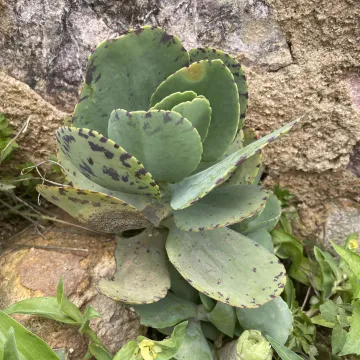
Botanically, this Kalanchoe is characterized by its large, ovate, and succulent leaves that feature serrated margins. The hallmark of this species is its distinctive marble-like pattern, consisting of purplish-brown spots on a pale green background. It produces large, four-petaled white flowers that emerge in corymb-like inflorescences.
Agronomic management for this crop emphasizes proper drainage and light management. The plant requires a porous, gritty substrate and an abundance of sunlight to maintain its compact growth habit and vibrant leaf coloration. Over-fertilization should be avoided, as it can lead to weak, etiolated growth that is prone to physical damage.
Regarding health management, Kalanchoe marmorata is susceptible to fungal issues if soil moisture levels are not strictly controlled. Key pests include mealybugs and spider mites, which can be mitigated through regular scouting and the application of appropriate contact insecticides or horticultural oils to protect the plant's structural integrity.
Photo gallery