
Description
Kickxia lanigera is a distinctive herbaceous plant belonging to the Plantaginaceae family. Characterized by its dense, woolly indumentum, this species is uniquely adapted to thrive in harsh, desert-like environments where thermal stress and water scarcity are the primary limiting factors for plant growth.
Native primarily to the arid regions of North Africa and Western Asia, this plant occupies niches in desert ecosystems, rocky slopes, and sandy soils. It has developed specific physiological mechanisms to survive in environments where most agricultural crops would perish, demonstrating high tolerance to solar radiation and low soil moisture levels.
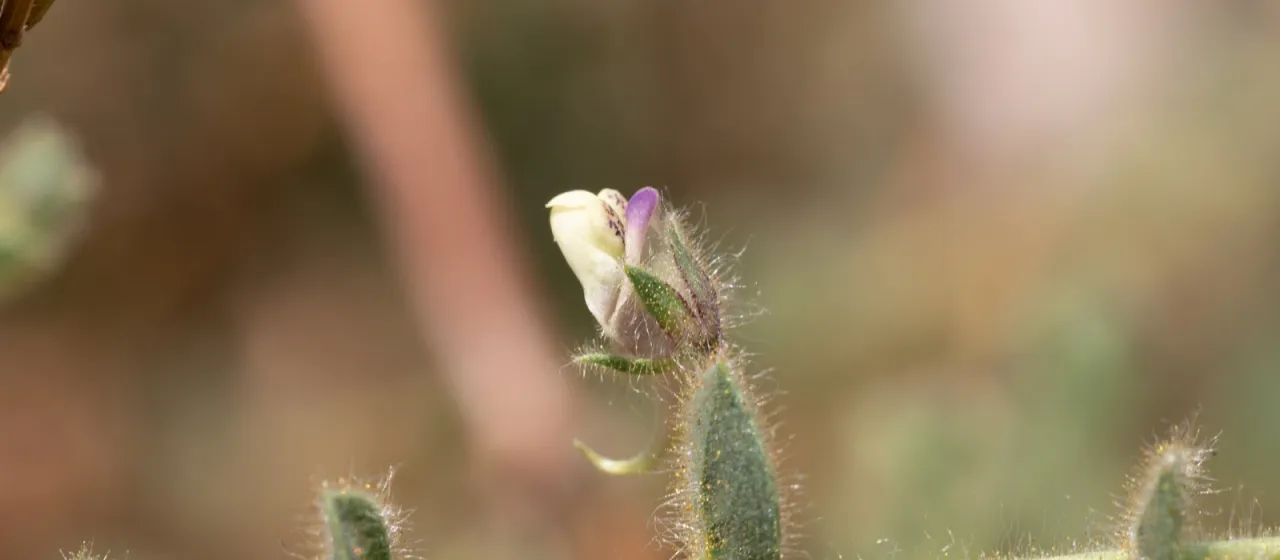
From a botanical standpoint, Kickxia lanigera exhibits a prostrate or ascending growth habit. Its foliage is small and covered in fine hairs (trichomes) that minimize transpiration. The flowers typically display the traditional bilabiate structure of the family, providing necessary visual signals for local pollinators in sparse vegetation landscapes.
Agricultural management of this species is minimal, as it is primarily a wild-growing plant. However, in trials involving xeriscaping or land restoration in arid zones, it requires well-drained, nutrient-poor substrate. Irrigation must be strictly controlled, as waterlogging is highly detrimental to its root system and may lead to rapid fungal decay.
While not a major commercial crop, it holds interest for research in dryland vegetation and traditional medicine. It is susceptible to common desert pathogens, including certain fungal wilt species, but is generally resilient to pests. Its role in sustainable agriculture is mostly observed in stabilization of sandy substrates and soil enrichment strategies in desert climates.
- Family: Plantaginaceae
- Adaptation: Extreme xerophyte
- Key morphology: Dense woolly trichomes
- Water requirements: Low
- Native habitat: Deserts and arid scrublands