
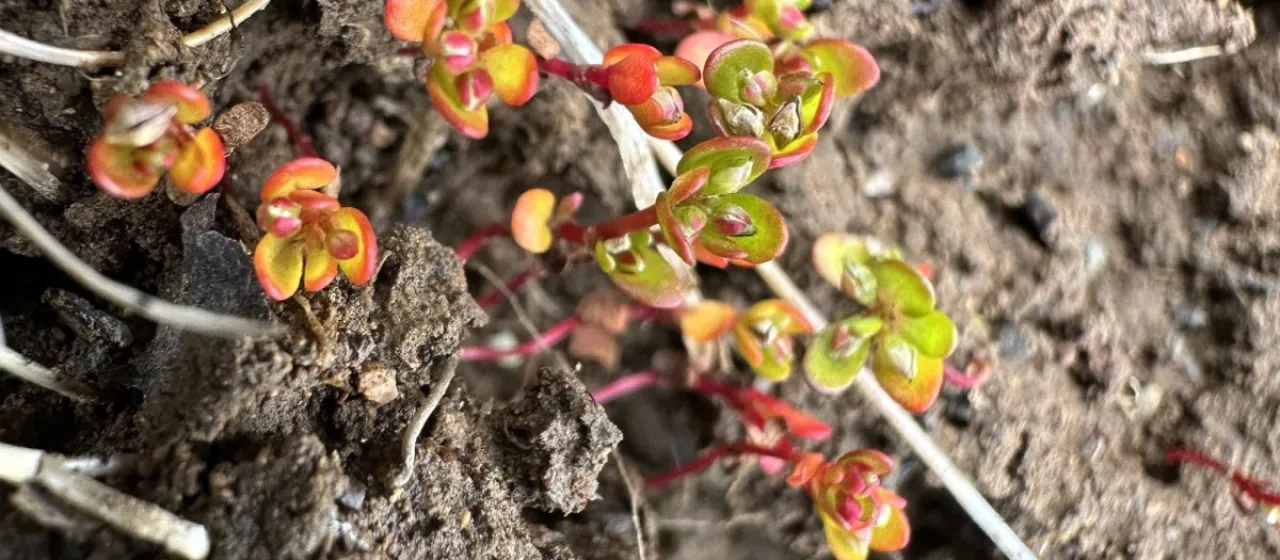
Description
Koenigia islandica is a distinctive annual herbaceous plant belonging to the Polygonaceae family. It is recognized as one of the few annuals capable of thriving in extreme arctic and subarctic climates. In botanical and agronomic studies, it is often highlighted for its unique survival strategies during very short growing seasons.
The plant has a circumpolar distribution, covering high latitudes across Eurasia and North America, including regions such as Iceland, Svalbard, and Greenland. It naturally inhabits damp, moist environments such as riverbanks, meltwater streams, and areas exposed after snowmelt, where it can quickly establish itself on bare mineral substrates.
Botanically, Koenigia islandica is a dwarf plant, typically growing to a height of only 5 to 10 centimeters. The stems are frequently tinged with red, and the leaves are small and opposite. The plant possesses a shallow root system designed to absorb nutrients and moisture rapidly during the brief summer, allowing it to flower and produce seeds within a matter of weeks.
Environmental requirements for this species are centered on high moisture availability and cool, temperate conditions. It does not tolerate shade or competition from larger, more aggressive tundra species. From an agronomic perspective, the cultivation of this species is not viable for commercial agriculture, although it serves as a critical subject for botanical research into cold-hardy plant physiology.
The economic value of this plant is largely restricted to its use as natural forage for reindeer herds grazing in northern regions. Due to its wild nature, it is not subjected to conventional pest or disease management protocols. In its native habitat, it may be affected by humidity-related fungal pathogens, but these do not pose significant threats to the species' survival in the wild.
- Family: Polygonaceae
- Plant type: Annual
- Height: 5–10 cm
- Distribution: Circumpolar
- Moisture preference: Hygrophilous