Spear-leaf conebush
Leucadendron spissifolium
Description
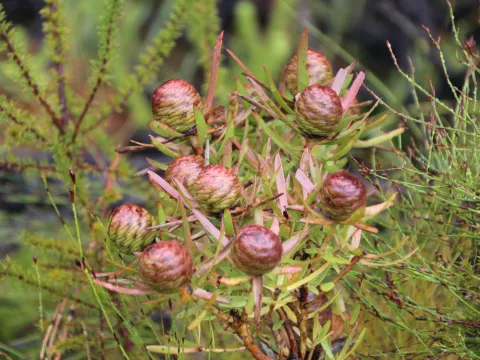
Spear-leaf conebush (Leucadendron spissifolium) is a distinctive evergreen shrub belonging to the Proteaceae family. It is recognized for its unique structural appeal and serves as an important component of the fynbos vegetation in its native habitat of South Africa.
The species is endemic to the Western Cape of South Africa, thriving in nutrient-poor, sandy, and acidic soils. It is well-adapted to a Mediterranean-type climate, characterized by cool, wet winters and warm, dry summers, which influence its physiological growth cycles.
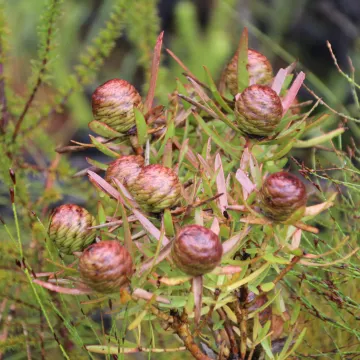
Botanically, Leucadendron spissifolium is a woody shrub with narrow, crowded leaves that are often characterized by a waxy coating. Like other members of the genus, it is dioecious, meaning male and female flowers are borne on separate plants. The vibrant bracts surrounding the flowers change color during the growth season, making them highly ornamental.
The agronomy of this crop necessitates strict adherence to specific soil conditions. It requires excellent drainage to prevent root pathogens, such as Phytophthora, which thrive in stagnant water. The soil must be acidic and extremely low in phosphorus, as these plants have evolved specialized proteoid roots to extract nutrients from depleted soils, making traditional fertilization potentially toxic.
Commercially, the spear-leaf conebush is cultivated primarily for the floral industry. Its woody stems and durable, colorful bracts make it an excellent choice for floral arrangements, offering long vase life and high aesthetic value in both fresh and dried forms. It is also an attractive addition to xeriscaping projects in compatible climates.
- Requires acidic, well-draining soil.
- Extremely sensitive to phosphorus toxicity.
- Needs full sun for best color development.
- Dioecious reproductive system.
Photo gallery