
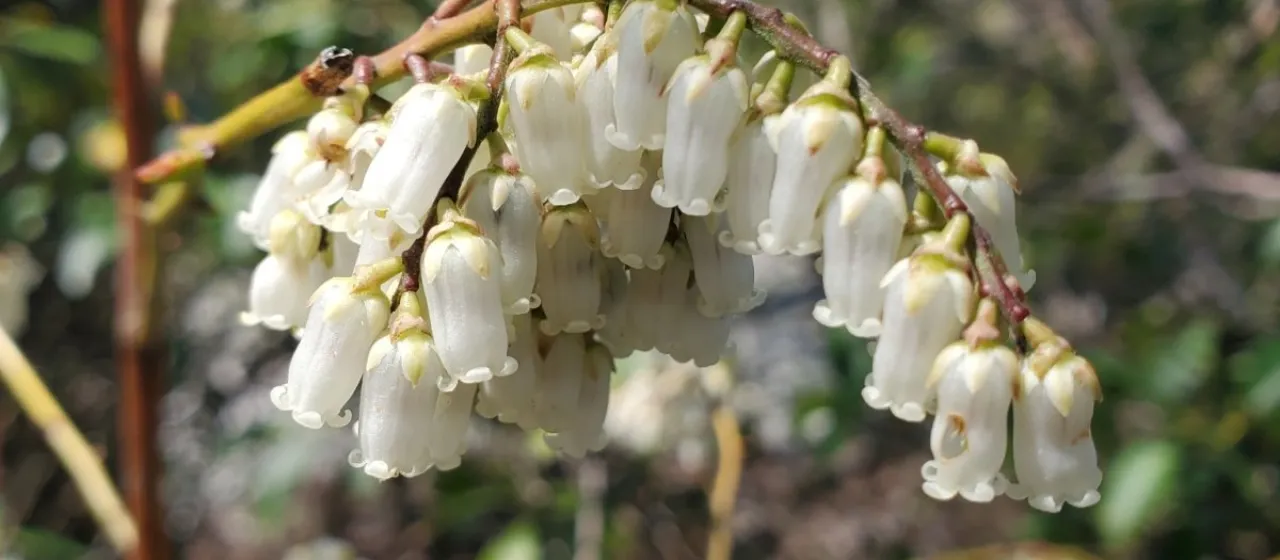
Description
Sweetbells (Leucothoe recurva) is a deciduous flowering shrub belonging to the Ericaceae family. Known for its distinctively graceful, arching stems and attractive foliage, this plant is a prized specimen for temperate gardens, particularly those designed to feature acid-loving, woodland-type flora.
Native to the southeastern United States, this shrub thrives in regions that provide moderate moisture and partial shade. Its natural habitat is typically rocky slopes and thickets, which dictates its preference for well-drained but consistently moist soil in a domestic garden setting. It is highly valued for its ability to provide structural beauty in areas where direct sunlight might be too harsh for other species.
Botanically, the plant grows to a medium-sized shrub, often reaching heights between 1 to 2 meters. Its primary aesthetic feature, beyond the bell-shaped white flower clusters that bloom in late spring, is the foliage. The leaves transition from a deep green in summer to brilliant, fiery shades of red, bronze, and orange as the temperatures drop in autumn, making it an excellent candidate for seasonal interest.
Cultivation requirements for Leucothoe recurva center on soil chemistry. It requires an acidic pH, typically achieved with peat-based amendments or pine bark. The root system is relatively shallow, making it essential to apply organic mulch regularly to keep the roots cool and moist. Avoid heavy, waterlogged soils, as this will lead to root rot; excellent drainage is the cornerstone of successful growth.
This shrub is primarily used in woodland gardens, border plantings, and as part of ericaceous displays. While generally robust, it can be susceptible to leaf spot and powdery mildew if air circulation is poor. Keeping the plant in an area with good light exposure, despite its shade tolerance, helps mitigate these fungal issues. Pests are minimal, though scale insects may occasionally appear in very stressed specimens.