Longleaf mat-rush
Lomandra longifolia
Description
Longleaf mat-rush (Lomandra longifolia) is a hardy perennial evergreen plant belonging to the Asparagaceae family. Renowned for its tufted habit and ribbon-like foliage, this species is widely cultivated for its structural beauty and resilience. Often mistaken for a grass, it is a versatile botanical resource used in both professional landscaping and sustainable land management.
Originating from Australia, the plant is native to a wide range of habitats, from coastal dunes to forest understories. This broad environmental adaptability has allowed it to be successfully introduced into various global agricultural and garden settings. Its ability to thrive in diverse conditions makes it a staple for low-maintenance landscaping and soil stabilization projects.
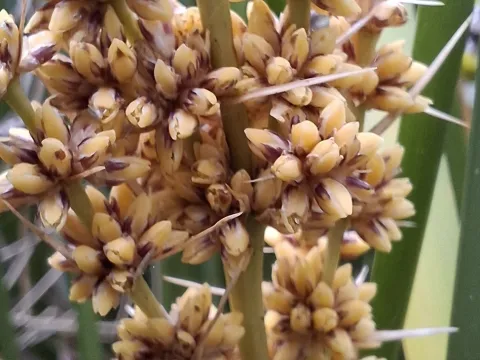
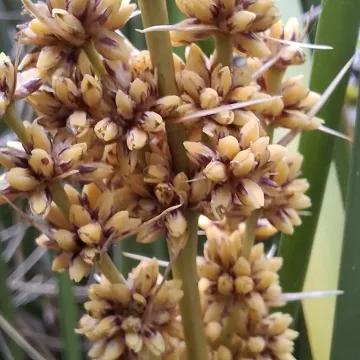
From a botanical perspective, the plant is characterized by its long, strap-like leaves that are tough, leathery, and vibrant green. These leaves arise from a dense central crown, forming a stable clump that can reach up to one meter in height. During the warmer months, it produces fragrant, yellow, spike-like inflorescences, which distinguish it from other non-flowering tufted plants.
Cultivation requirements are minimal, as the plant is highly adaptable to a variety of soil types, including sandy, clay, or rocky soils. The most critical factor for successful growth is ensuring good drainage to prevent root rot. Once established, the longleaf mat-rush is extremely drought-tolerant and requires little to no supplemental irrigation, making it a sustainable choice for water-scarce regions.
Main economic and practical applications include:
- Erosion control on embankments and sloping landscapes.
- Ornamental use in urban green spaces and xeriscaping.
- Traditional fiber extraction for weaving and craft materials.
- Restoration of native habitats by providing cover for local fauna.
In terms of plant health, Lomandra longifolia is remarkably resistant to most common pests and diseases. The primary issues encountered in agricultural management are often related to overwatering, which may invite fungal pathogens to the crown. Regular thinning of dead foliage and maintaining optimal soil aeration are usually sufficient to ensure the longevity and vitality of the stand.
Photo gallery