
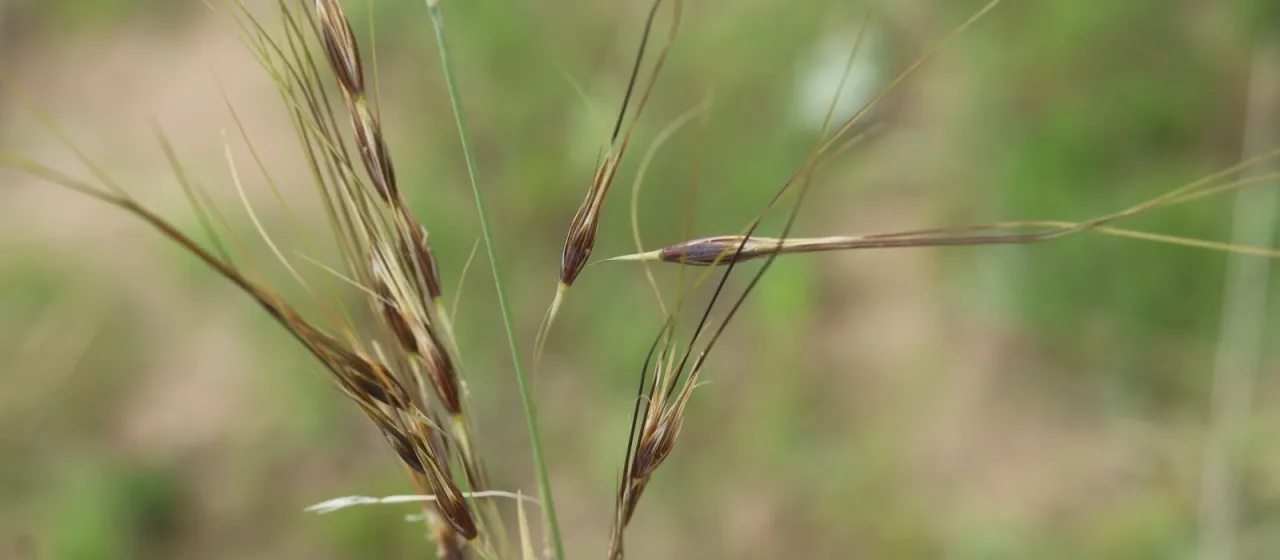
Description
Loudetia simplex, commonly known as common golden grass, is a perennial bunchgrass belonging to the Poaceae family. This species is a foundational plant in savanna ecosystems, contributing significantly to the biomass and biodiversity of tropical grasslands across Africa, Madagascar, and parts of South America.
The plant is naturally adapted to challenging environments, including regions with poor, acidic soils and distinct wet and dry cycles. It thrives in open, sunny habitats and often becomes the dominant species in degraded areas, where its robust root system helps maintain soil structure and stability against environmental pressures.
Botanically, this grass grows in dense tufts ranging from 60 cm to over a meter in height. Its stems are erect and node-rich, supporting narrow, linear leaves that exhibit a characteristic texture. The inflorescence is a loose, graceful panicle that transitions into a distinct golden or reddish-brown hue, earning the plant its common name and making it easily identifiable in the landscape.
Agricultural management of this crop centers on its resilience to fire. In many tropical pastoral systems, periodic burning is employed to remove dormant, dry foliage, which stimulates the growth of fresh, more palatable shoots for livestock. Because it is highly tolerant of drought and low soil nutrients, it requires minimal input, making it a sustainable choice for extensive grazing systems.
While primarily valued as forage, the nutritional quality of Loudetia simplex is highest during the early stages of development. As the plant matures, the cellulose content increases significantly, reducing its digestibility for ruminants. Beyond forage, the species plays a vital ecological role in erosion control, as its extensive root system binds soil particles effectively on hilly terrains.
- Exceptional drought tolerance
- Ability to thrive in nutrient-poor soils
- High resilience to wildfires
- Effective role in soil erosion prevention
- Valuable early-season grazing resource