
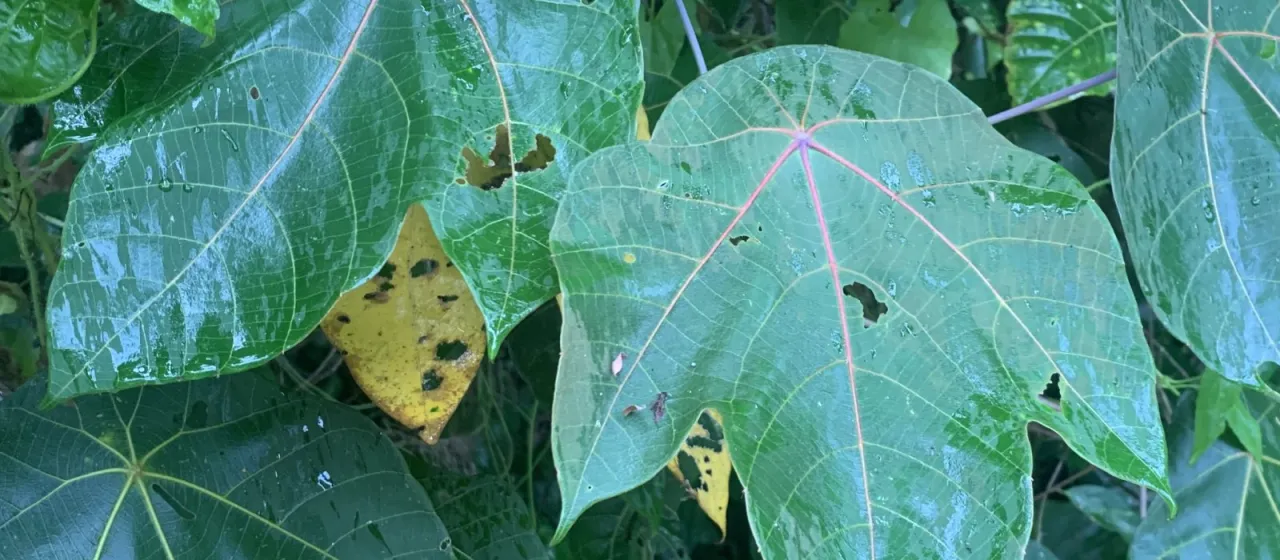
Description
Macaranga griffithiana is a prominent, fast-growing evergreen tree species belonging to the Euphorbiaceae family. Recognized for its ecological significance, this plant is frequently identified as a pioneer species in tropical forest succession, capable of rapid colonization in disturbed environments.
The native range of this species extends across the humid tropics of Southeast Asia, primarily observed in countries such as Malaysia, Indonesia, and Thailand. It thrives within lowland tropical forests and secondary growth areas, where consistent year-round precipitation and high ambient humidity support its rapid physiological development.
Botanically, the species is distinguished by its large, peltate leaves that maximize photosynthetic efficiency in light-limited tropical understories. Furthermore, the tree is known for its complex biological interactions, including specific symbiotic relationships with ants that reside within its stems and provide defense against herbivorous insects.
Agricultural and forestry requirements for this species include the need for well-drained, nutrient-rich soils. While the species is notably resilient, optimal growth rates are achieved when provided with sufficient moisture during the establishment phase, making it a reliable candidate for reforestation programs in tropical regions.
Economic and utility applications of the tree are centered around its use in biomass production and ecosystem restoration. Recent scientific interest has also shifted towards examining the chemical constituents of its bark and leaves, which may offer potential applications in traditional medicine and industrial bio-products.
- Rapid growth and high biomass potential.
- Pioneer species for tropical reforestation.
- Symbiotic defense mechanisms against pests.
- Adaptability to disturbed lowland forest soils.