
Description
Macaranga hosei is a fast-growing tree species belonging to the Euphorbiaceae family. Known for its remarkable colonization speed, this plant is an essential component of secondary tropical forests in Southeast Asia, facilitating the ecological recovery of disturbed landscapes.
The origin of the species is rooted in the tropical rainforests of Borneo, Peninsular Malaysia, and Sumatra. Its cultivation range is strictly tropical, where it thrives in high-rainfall environments, serving as a pioneer species that quickly occupies gaps in the forest canopy and abandoned agricultural land.
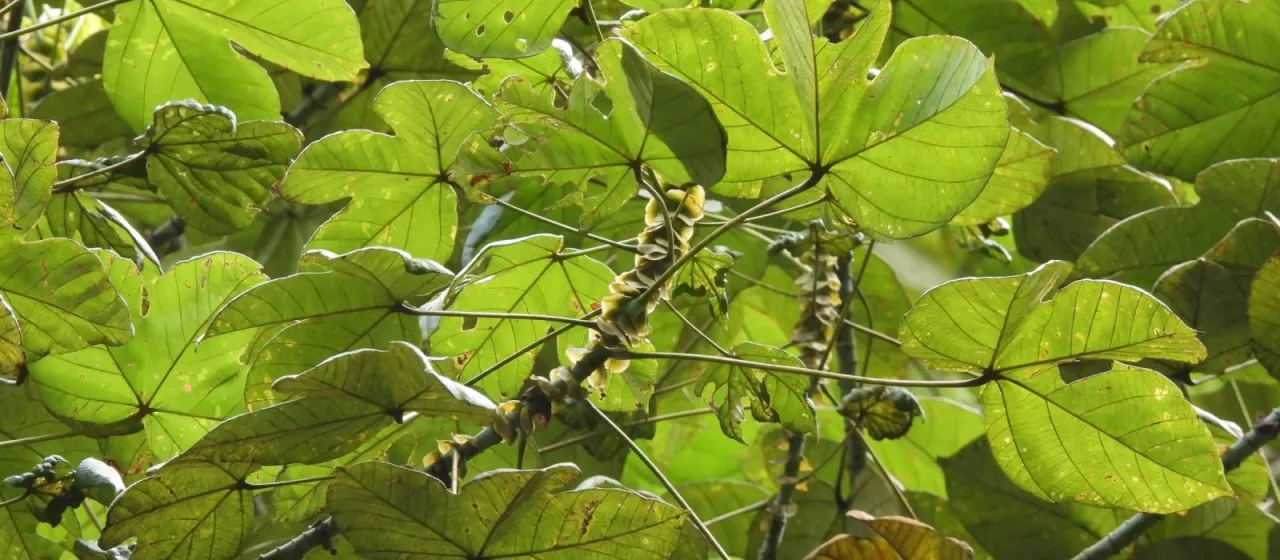
Botanically, Macaranga hosei is distinguished by its large, heart-shaped leaves and a rapid vertical growth habit. The tree exhibits a unique symbiotic relationship with specific ant species, which inhabit its hollow stems and provide protection against herbivores, effectively acting as the tree's natural security system.
Climatic and soil requirements focus on high moisture levels and warm temperatures throughout the year. The species performs best in well-drained but fertile tropical soils. In terms of silvicultural management, providing adequate sunlight is the most critical factor for ensuring healthy sapling development and vigorous biomass accumulation.
Main areas of economic and environmental utility include:
- Large-scale reforestation of degraded tropical forest zones.
- Soil conservation and erosion control on vulnerable slopes.
- Potential use in sustainable agroforestry systems.
- Biomass production for local industrial use.
Regarding health, the tree may be susceptible to leaf spot diseases when air circulation is poor, particularly in humid nursery conditions. While various insects might feed on the foliage, the tree’s biological partnership with ants remains its most effective defense, significantly reducing the need for chemical pest control in forest management projects.