
Description
Macaranga indica is a prominent species within the Euphorbiaceae family, widely recognized for its rapid growth rate and ecological significance in tropical landscapes. As a pioneer species, it occupies a vital niche in forest succession, colonizing disturbed areas and preparing the soil for more complex vegetation layers.
The native range of this tree extends across tropical Asia, encompassing nations such as India, Malaysia, and Indonesia. It thrives in high-humidity environments characterized by consistent annual rainfall and warm temperatures, making it a staple of the tropical rainforest understory and edge habitats.
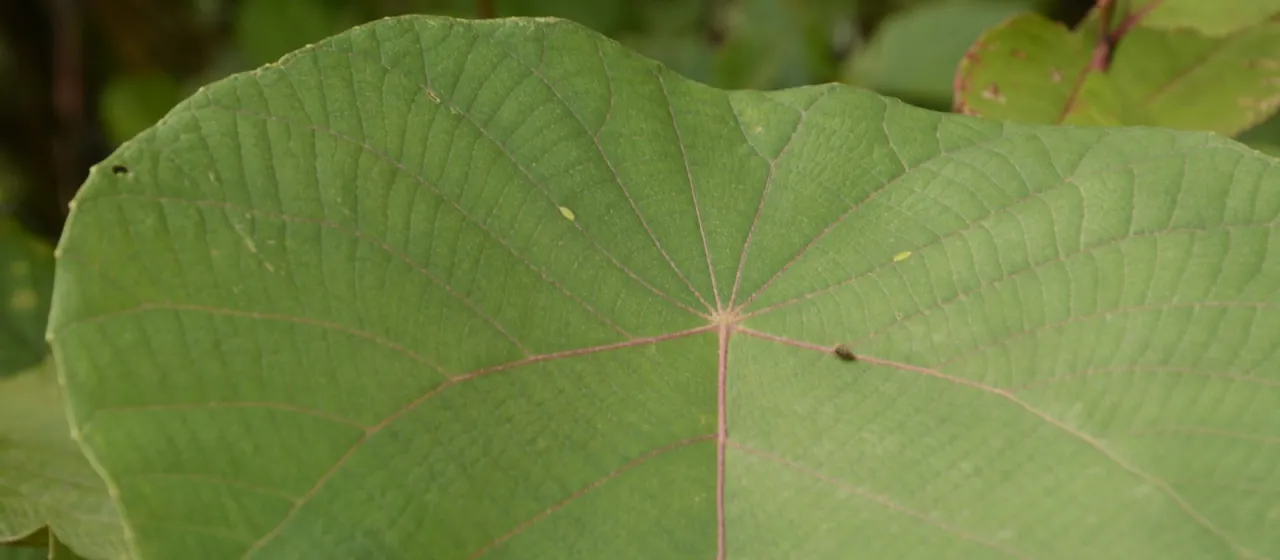
From a botanical standpoint, Macaranga indica is distinguished by its large, alternate, cordate leaves and its habit of producing nectar-secreting glands. These features often facilitate symbiotic relationships with ants, which in turn protect the tree from herbivores. The species exhibits dioecious flowering, where separate male and female reproductive structures are found on different individual trees.
Agricultural and forestry management requires sites with well-drained, nutrient-rich soils. While the tree is hardy, it shows a significant preference for high-light exposure. Successful cultivation involves monitoring plant density to prevent overcrowding, as the tree's rapid growth can lead to excessive competition for light and water if not properly managed during the establishment phase.
Economically, the species is valued for its versatile, lightweight timber, which is frequently used in light construction and pulp production. Beyond industrial applications, the plant is subject to ongoing research regarding its biochemical properties, as various parts of the tree contain compounds potentially useful for medicinal purposes, adding to its value in sustainable plantation forestry.
- Exceptional early-stage growth velocity.
- Ecological importance as a pioneer species.
- Adaptability to varied tropical soil types.
- Potential for paper and wood-based manufacturing.