
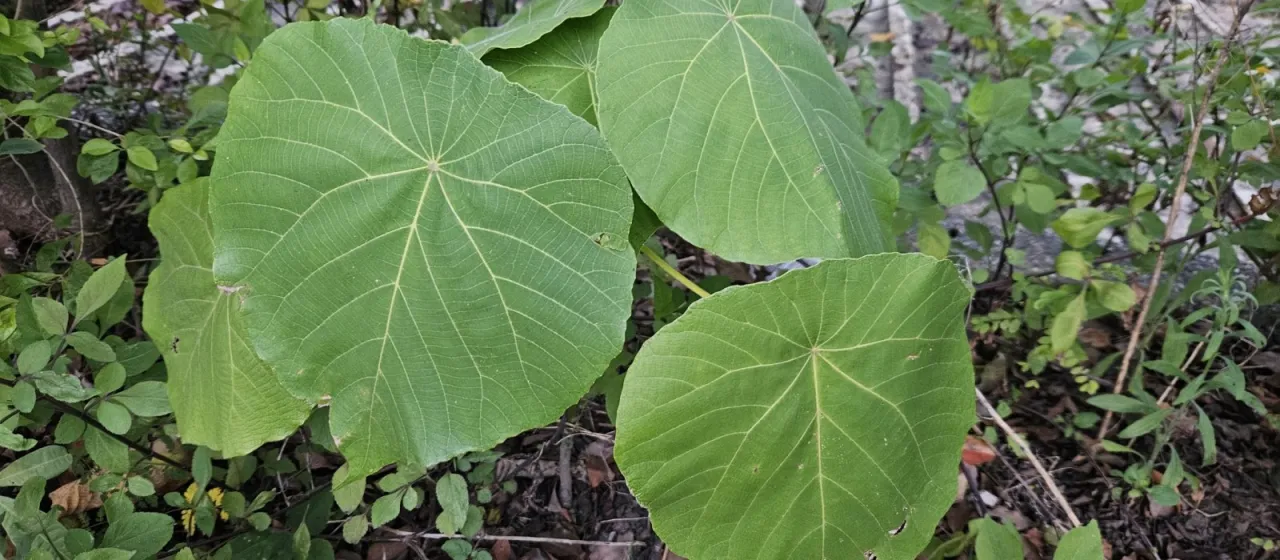
Description
Macaranga tanarius is a fast-growing tree belonging to the Euphorbiaceae family. It is widely recognized in tropical agriculture and forestry as a pioneer species capable of colonizing disturbed sites rapidly, playing a crucial role in ecological succession and land rehabilitation.
The species is native to Southeast Asia, Northern Australia, and the Pacific Islands. It thrives in humid, tropical climates and is commonly found in forest clearings, riverbanks, and areas where sunlight is abundant. Its wide distribution is evidence of its adaptability to varying environmental conditions.
Botanically, it features large, peltate leaves with long petioles and a distinctively rounded shape. The tree can reach heights of up to 12 meters. As a dioecious plant, it requires both male and female individuals to produce fruit, which are typically small, greenish capsules containing seeds that are easily dispersed by birds and water.
In terms of cultivation, Macaranga tanarius prefers well-drained soil rich in organic matter. While it is hardy, the plant requires high moisture levels during its initial establishment phase. Agricultural management focuses on thinning dense stands to ensure optimal growth rates and managing competing weeds in the early stages of plantation development.
Economic applications are diverse, ranging from traditional medicine, where extracts are used for their pharmacological properties, to industrial usage. The bark contains significant levels of tannins used in leather tanning and textile dyeing. Furthermore, the tree is extensively used in reforestation projects to prevent soil erosion and improve soil fertility in degraded tropical landscapes.
Pests and diseases are generally manageable; however, the tree can be susceptible to various leaf-chewing insects and fungal infections in poorly drained soils. Because of its resilience and fast growth, it remains a valuable resource for agroforestry systems seeking to integrate native biodiversity with productive land use.