
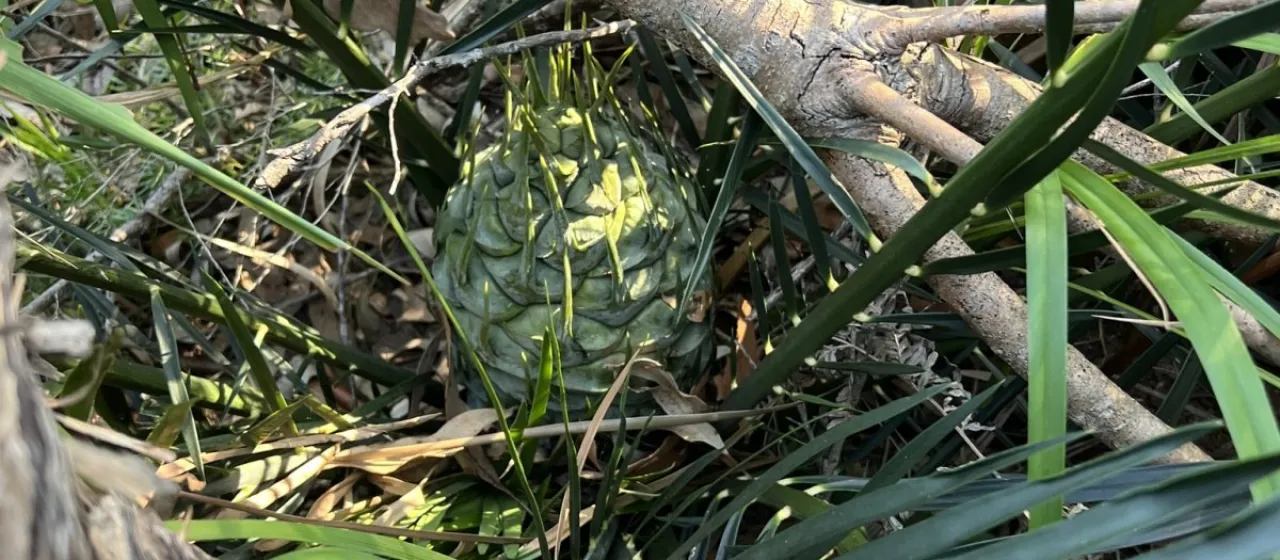
Description
The Burrawang (Macrozamia communis) is a significant species within the Zamiaceae family, representing one of the most resilient cycads in the world. As a gymnosperm, it maintains a prehistoric appearance, characterised by a thick, woody trunk and large, dark green, pinnate leaves that evoke the aesthetic of ancient geological eras.
Native to the eastern coastal regions of Australia, specifically New South Wales, the Burrawang thrives in diverse ecosystems, ranging from open eucalyptus forests to coastal heaths. It is highly adapted to Australian fire-prone environments, possessing the ability to resprout from its subterranean caudex even after severe bushfires have destroyed the foliage.
Botanically, Macrozamia communis is a dioecious species, meaning individual plants are either male or female. The plant exhibits a very slow growth rate, often taking many years to reach maturity. Its leaves are glossy, stiff, and arching, forming a symmetrical crown that makes it highly desirable for ornamental horticulture in temperate and subtropical climates.
Cultivation requires specific environmental conditions. It demands well-draining soil, typically a sandy or gravelly loam, to prevent root rot, which is the most common cause of mortality in nursery specimens. It performs best in partial shade to full sun, provided the climate remains frost-free or experiences only very light, short-lived frost events.
The plant is widely used in landscape design to provide a structural, architectural element. However, gardeners must exercise caution: all parts of the Burrawang contain macrozamin, a potent neurotoxin. Pests such as mealybugs and scale insects are the primary threats, requiring consistent monitoring and manual cleaning or appropriate insecticidal treatment to preserve the foliage health.