
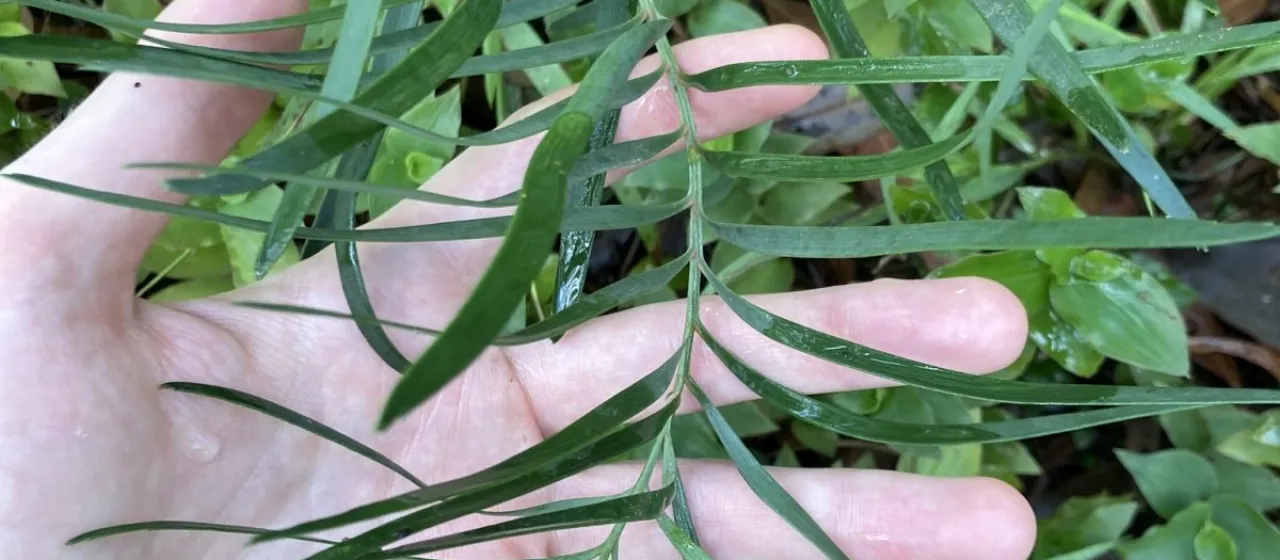
Description
Macrozamia spiralis is a rare and distinct species belonging to the Zamiaceae family within the order Cycadales. Often regarded as a living fossil, this ancient gymnosperm represents a lineage that has survived since the Mesozoic era. Its evolutionary history makes it a highly prized specimen for botanical collections and specialized gardens worldwide.
The plant is native to the eastern parts of New South Wales, Australia. In its natural habitat, it thrives in open sclerophyll forests, often found in rocky, well-drained slopes. These environmental conditions define its cultural requirements, as it is perfectly adapted to nutrient-poor soils and sporadic moisture availability in its native range.
Morphologically, Macrozamia spiralis is characterized by a subterranean or short, stout trunk topped with a crown of stiff, pinnate leaves. The leaflets are notable for their characteristic spiral arrangement along the rachis. As a dioecious species, it produces distinct male and female cones on separate plants, contributing to its unique reproductive biology.
Cultivation requires specialized agricultural practices focused on extreme soil drainage. The plant grows exceptionally slowly, making it unsuitable for large-scale agricultural production, but highly desirable in the ornamental horticulture market. It requires bright, filtered light and protection from frost, as its tolerance to extreme cold is quite limited.
- Requirement for a coarse, mineral-based potting mix.
- Strict adherence to a "dry-between-waterings" cycle.
- High sensitivity to root disturbance and over-fertilization.
- Essential need for air circulation to prevent fungal pathogens.
In terms of plant health, the most significant threats are root rot and crown rot, typically caused by excessive soil moisture. Pests such as scale insects and mealybugs can occasionally infest the foliage, requiring systemic or manual control methods. Its use is limited to ornamental purposes and scientific research, as the plant contains toxins and is not an edible crop.