
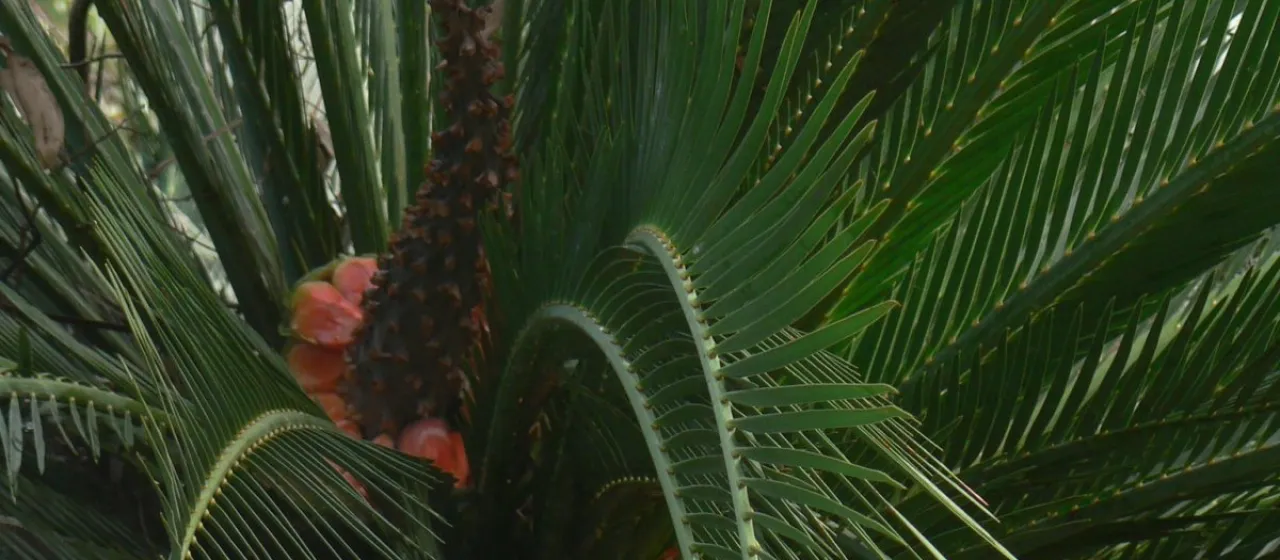
Description
Macrozamia moorei is a remarkable species of cycad belonging to the Zamiaceae family. Often referred to as a "living fossil," this plant has remained virtually unchanged since the Mesozoic era, exhibiting a robust and primitive structure that makes it a highly prized specimen in botanical collections.
The plant is native to central and eastern Queensland, Australia. Its natural range is characterized by rocky ridges and open eucalypt forests. These habitats provide the specific microclimate and high-intensity light levels necessary for the species to thrive and develop its characteristic stout trunk.
Botanically, Macrozamia moorei is known for its massive, columnar trunk, which can grow up to 7 meters tall in mature specimens. It features a crown of long, glossy, dark green pinnate leaves that can reach lengths of several meters, creating a striking architectural appearance in any landscape.
Regarding its cultivation, the plant demands excellent drainage to prevent root rot, which is the primary cause of failure in domestic settings. It thrives in gritty, mineral-rich soils and requires full sun to partial shade. Due to its slow growth rate, it is frequently used as a permanent focal point in xeriscaping or rock gardens.
- Sun exposure: Full sun is preferred for mature plants.
- Watering: Deep, infrequent watering; allow soil to dry completely.
- Toxicity: Contains cycasin; handle with care and keep away from pets.
- Climate: Hardy to light frost once fully established.
In terms of plant health, the main pests include scale insects and mealybugs, which tend to lodge in the leaf bases. Maintaining good air circulation is the best preventive measure against fungal infections and pests. While robust, the plant is intolerant of waterlogged soil conditions, which must be strictly avoided.