
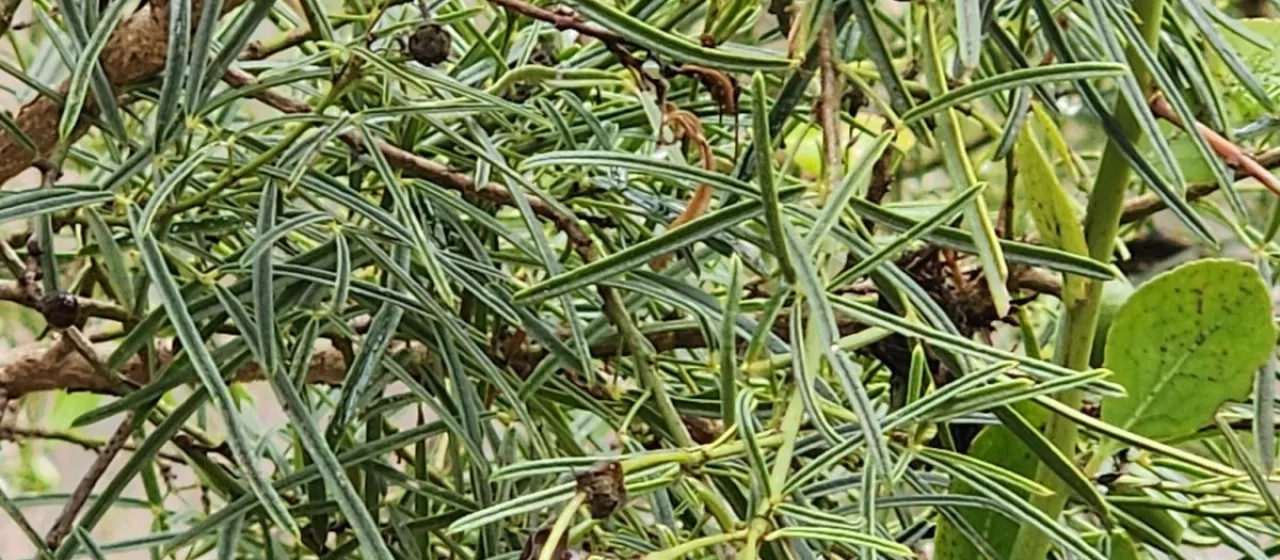
Description
Maerua rosmarinoides is a resilient, evergreen shrub belonging to the Capparaceae family. This plant is known for its distinct foliage which closely resembles that of rosemary, making it a visually unique specimen. It is gaining interest in research related to desert farming and the development of sustainable landscapes in arid environments.
The species originates from the semi-arid regions of Africa, where it has adapted to survive in harsh environmental conditions. Its native habitat typically consists of dry bushland and stony soils. This geographical origin dictates the plant's physiological preference for intense sunlight and low atmospheric moisture levels.
Botanically, Maerua rosmarinoides is characterized by its linear, narrow leaves and a robust, woody stem structure. The plant exhibits a slow growth rate, investing energy into developing an extensive root system that enables it to thrive even when water sources are scarce. The flowers are distinctive, featuring long filaments that are typical of the caper family.
Agricultural success depends on providing an environment that mimics its natural habitat. Key cultivation requirements include high light exposure and highly permeable, well-draining soils. Excessive irrigation should be avoided at all costs, as the plant is highly susceptible to root rot if left in standing water. Minimal fertilization is recommended to maintain a natural, compact growth habit.
Potential agricultural applications include the restoration of arid rangelands and the stabilization of fragile, erodible landscapes. While not a commercial crop in the traditional sense, it serves as an excellent case study for drought-resistant plant breeding. Common issues include infestation by sap-sucking insects and localized root pathogens in poorly drained growing conditions.