
Description
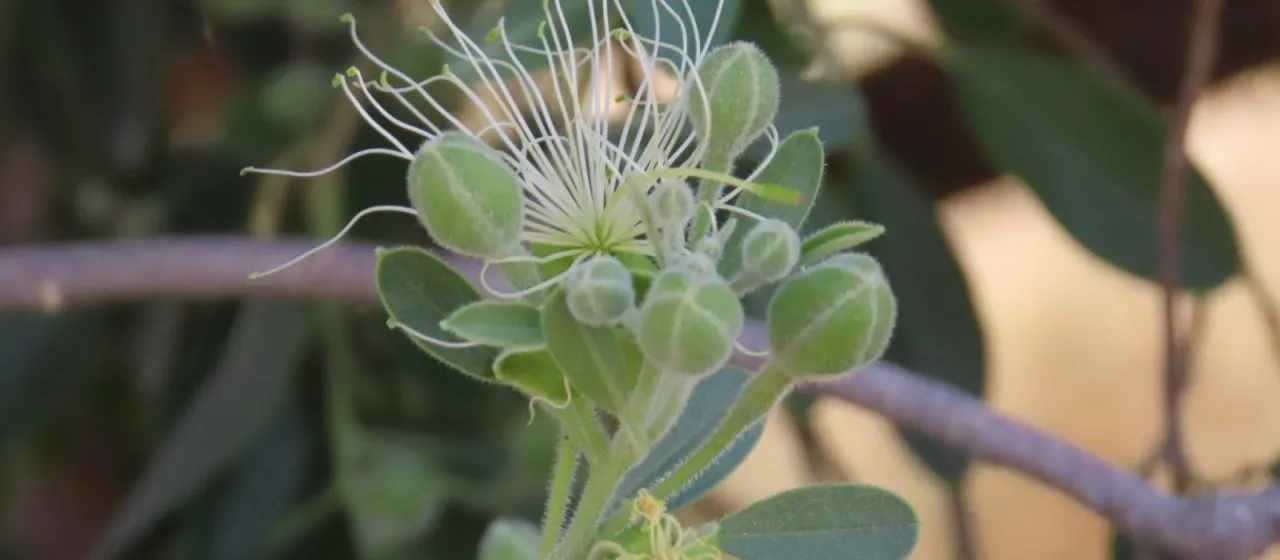
Maerua schinzii is a woody shrub species belonging to the Capparaceae family. As a specialized xerophyte, this plant has evolved to thrive in some of the most challenging arid environments of Southern Africa. It serves as a vital component of local biodiversity, often providing essential nutritional support to herbivores in regions where other vegetation fails to survive.
The plant is native to the arid landscapes of Namibia and Botswana, where it predominantly occupies sandy soils and rocky outcrops. It is frequently observed along ephemeral riverbeds, reflecting its ability to tap into deeper water reservoirs. Its distribution is closely linked to specific climatic zones characterized by low and irregular precipitation patterns.
Botanically, Maerua schinzii exhibits several adaptations to drought, such as sclerophyllous leaves that reduce transpirational loss. The plant structure is compact, allowing it to withstand high wind speeds and intense solar radiation common in its habitat. Its root system is exceptionally deep, reaching layers of soil that remain relatively cool and moist even in the height of the dry season.
Regarding agrotechnical requirements, the species demands full sun exposure and excellent soil aeration. It is highly intolerant of waterlogging, making soil texture a critical factor for successful propagation. When cultivated, it requires minimal intervention, as it is adapted to low-nutrient substrates; however, initial establishment may require careful monitoring of soil moisture during the first growth cycle.
The economic value of this species lies in its potential as a supplementary forage source in arid-land farming systems. Additionally, it is investigated for its role in preventing soil erosion and stabilizing sandy terrain. While it is generally hardy, the plant can be affected by opportunistic fungal infections in high-humidity periods and various foliage-feeding insects, although major pest outbreaks are rare in its native environment.