Magnolia laevifolia
Magnolia laevifolia (Y. W. Law & Y. F. Wu) Noot.
Description
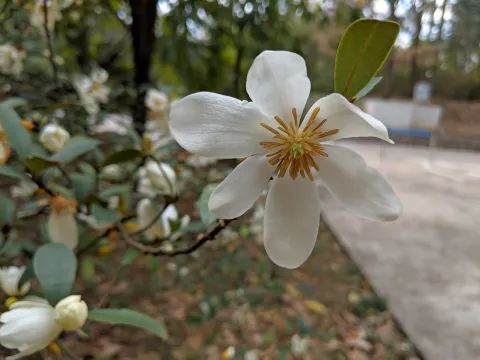
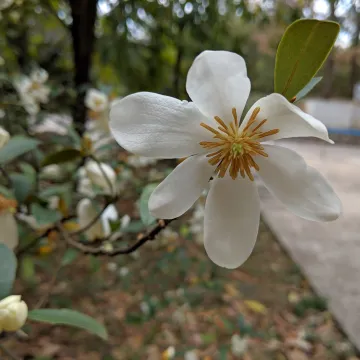
Magnolia laevifolia, formerly classified as Michelia yunnanensis, is a highly prized evergreen shrub or small tree belonging to the Magnoliaceae family. Known for its compact habit and fragrant, creamy-white spring blossoms, this species has become a staple in modern ornamental horticulture, offering year-round foliage interest.
The plant originates from the high-altitude regions of Southwest China, specifically Yunnan province. This geographic history dictates its preference for cool, moist environments. While it is more cold-hardy than many other tropical-looking evergreen magnolias, it thrives best in regions where the climate remains temperate and protected from harsh, desiccating winds.
Botanically, Magnolia laevifolia is distinguished by its glossy, dark green leaves that feature a unique, rusty-brown indumentum (hair-like covering) on the undersides. The flowers are typically produced in clusters, blooming early in the spring. The plant can reach a height of 2 to 4 meters, making it versatile for both garden borders and container cultivation.
Cultivation requires well-draining, slightly acidic soil enriched with compost or organic matter. It prefers a position in partial shade to prevent leaf scorch during the summer months. Consistent moisture is vital; however, growers must ensure that the planting site does not become waterlogged, as the roots are prone to decay if left in stagnant water for prolonged periods.
In terms of agricultural and landscape use, it is often utilized as an informal hedge, a specimen plant, or a focal point in woodland-style gardens. Typical pests include scale insects and spider mites, which can proliferate if the plant is kept in overly dry conditions. Nutritional care involves applying specialized fertilizers for acid-loving plants to prevent nutrient deficiencies like iron chlorosis.
- Soil pH requirement: 5.5 to 6.5
- Mulching is essential for root protection
- Avoid over-fertilizing during the winter
- Prune only to maintain shape after flowering
Photo gallery