Umbrella magnolia
Magnolia tripetala (L.) L.
Description
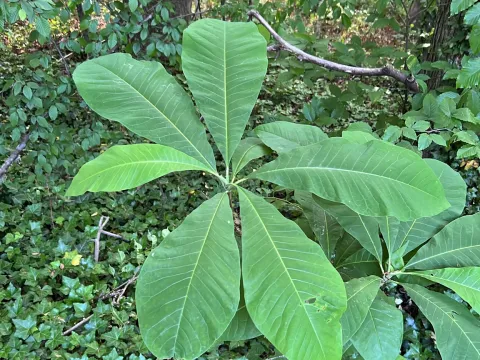
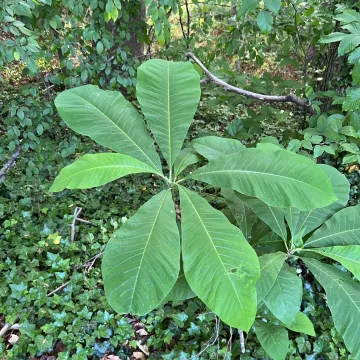
The Umbrella magnolia (Magnolia tripetala) is a distinct deciduous tree species belonging to the Magnoliaceae family. Known for its massive foliage that creates an umbrella-like canopy, this plant is highly prized in landscape architecture for its bold, tropical appearance in temperate garden settings.
Native to the eastern United States, specifically in the Appalachian region, it naturally thrives in rich, moist soils near streams and in sheltered valleys. Its historical range demonstrates its preference for humid microclimates, which should be replicated in cultivation to ensure vigorous growth and health.
The tree exhibits striking botanical traits, most notably its large, lance-shaped leaves that can reach up to 60 centimeters in length. The flowers, appearing in late spring, are creamy white with a distinct, sometimes pungent scent. The botanical name tripetala refers to the three outer sepals that recurve downward soon after the flower opens, a diagnostic feature of the species.
Cultivation requires strict attention to soil composition and site selection. This magnolia demands deep, loamy, and consistently moist soil enriched with organic matter. It performs best in partial shade, where it is shielded from the scorching afternoon sun and drying winds, which can easily damage the large, thin leaf blades.
Management of the species involves proactive pest and disease control. While generally robust, the Umbrella magnolia can be susceptible to:
- Iron chlorosis when grown in alkaline or neutral soils.
- Scale insects and aphids that congregate on young shoots.
- Fungal leaf spots during periods of excessive rainfall or poor air circulation.
Photo gallery