
Description
Cotton bush (Maireana aphylla) is a perennial shrub belonging to the Amaranthaceae family, formerly classified within the Chenopodiaceae family. It is a highly resilient plant known for its ability to thrive in challenging environments, playing a critical role in the ecology of arid landscapes.
The plant is native to Australia, where it is distributed across vast arid and semi-arid zones. Its natural habitat includes harsh desert plains and saline areas. The species has evolved to withstand extreme environmental stress, including prolonged droughts, intense heat, and high soil salinity levels.
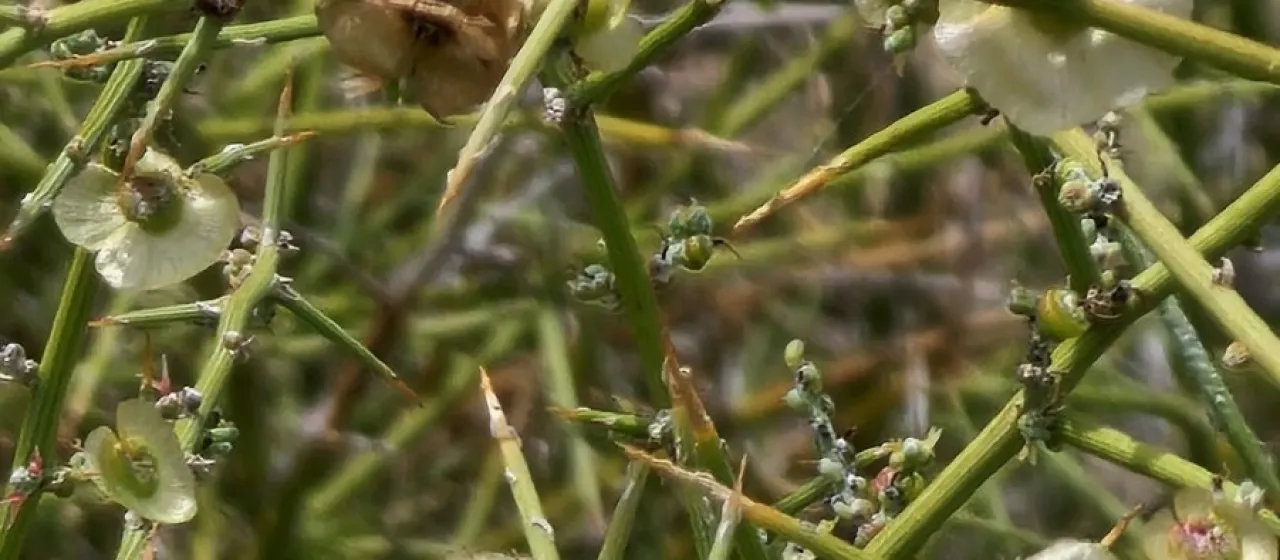
Botanically, the plant is characterized by a highly branched structure with minimal foliage, as its leaves are greatly reduced; the green stems perform photosynthesis. It typically grows as a shrub up to 1.5 meters tall. A deep and extensive root system allows it to extract moisture from significant depths, which also contributes to effective soil stabilization.
Agricultural practices for Maireana aphylla focus primarily on rangeland management and soil conservation. It thrives in well-drained soils and is exceptionally salt-tolerant. Because it is highly resistant to grazing pressure, it is frequently used in projects aimed at regenerating degraded pastoral lands, requiring minimal human intervention once established.
The primary economic value lies in its role as a supplementary fodder source for livestock in arid regions. During dry seasons, when grass cover is depleted, it provides essential browsing material. The plant is rarely affected by significant pests or diseases, largely due to its evolutionary adaptation to hostile environments and high chemical defenses, making it a reliable component of sustainable grazing systems.