
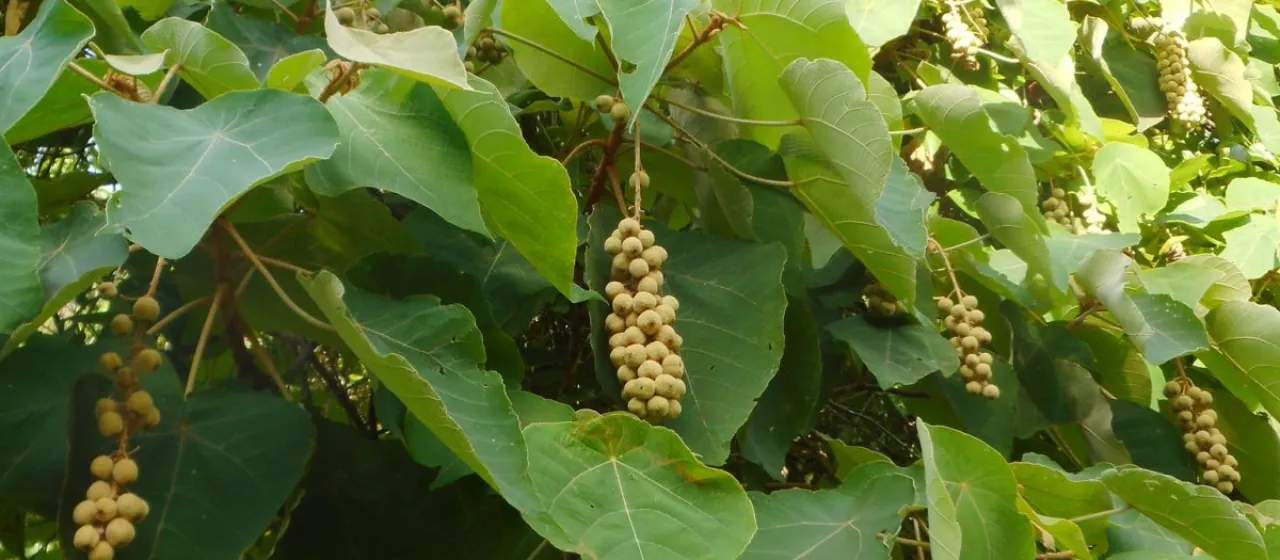
Description
Mallotus barbatus is a perennial woody plant or large shrub belonging to the Euphorbiaceae family. In agricultural science, this species is noted for its potential in secondary metabolite production, which makes it a subject of interest for both local industries and pharmacological research.
Native to the tropical regions of Southeast Asia, the species naturally inhabits forests and highland areas in China, India, and the Philippines. Its distribution pattern is strictly tied to tropical climates where consistent rainfall and high humidity support the rapid development of its vegetative structure throughout the entire calendar year.
The botanical profile of the plant features large, heart-shaped leaves covered in distinct pubescence, which provides its unique texture. The small flowers are arranged in terminal inflorescences, followed by capsular fruits covered in soft spines or hairs. The root system is quite extensive, allowing the plant to stabilize in varying types of tropical soils.
Regarding its cultivation, Mallotus barbatus requires well-drained, fertile soil with a neutral to slightly acidic pH level. Agricultural success depends on maintaining adequate soil moisture levels while preventing waterlogging, which the plant does not tolerate well. It thrives best in semi-shaded environments, especially during the early growth stages to avoid excessive sunlight stress.
- Requires protection from frost.
- Prefers high humidity conditions.
- Responsive to organic soil fertilization.
- Needs regular monitoring for spider mite infestations.
Its primary economic uses range from acting as a source for natural dyes and agricultural insecticides to applications in traditional medicine. Pathological risks include various fungal leaf spots and root rots caused by environmental stress. Monitoring and maintaining a balanced ecosystem within the plantation are the best preventative measures against pests such as aphids and leaf-eating beetles.