
Description
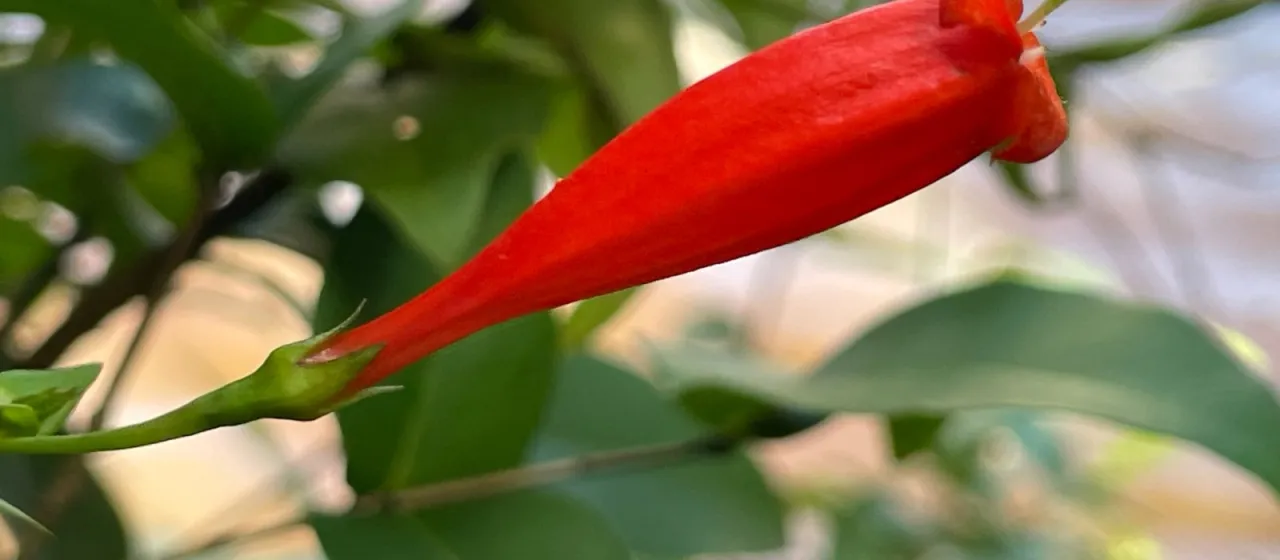
The Firecracker vine (Manettia ignita) is an ornamental evergreen climber belonging to the Rubiaceae family. The plant is widely recognized for its striking, tubular flowers that exhibit vibrant red-orange colors with yellow tips, mimicking the appearance of flickering firecrackers. Due to its rapid growth rate and year-round green foliage, it is a favored choice for vertical landscaping in greenhouses and conservatory environments.
Originating from the tropical regions of South America, particularly areas within Brazil and Paraguay, the Manettia ignita is accustomed to humid forest habitats. In its native ecosystem, it functions as an epiphyte or a scrambler, climbing towards the canopy to capture sunlight. Cultivation outside its natural range requires the recreation of these specific tropical conditions to ensure healthy development and consistent flowering.
Botanically, the plant features slender, twining stems and glossy, lance-shaped leaves that provide a lush backdrop for its unique blooms. The flowers, while relatively small, are produced in abundance during the warmer months, creating a decorative effect that is highly valued in horticulture. It is a perennial climber that requires vertical support, such as a trellis or wire, to properly display its aesthetic potential.
Successful cultivation requires attention to specific environmental factors, including temperature and moisture management. The soil should be well-draining, rich in organic matter, and kept consistently moist but not waterlogged. The species is sensitive to cold temperatures and dry air, necessitating a controlled environment in temperate climates to prevent growth retardation or the death of delicate stems.
- Light: Bright, indirect sunlight is essential for optimal flowering.
- Water: Keep the substrate consistently moist throughout the growing season.
- Temperature: Prefers a range between 18°C and 24°C; protect from frost.
- Humidity: High humidity is required to prevent leaf desiccation.
- Fertilization: Apply a balanced liquid fertilizer during the active growing phase.
Typical plant health issues for this culture include infestations by spider mites, aphids, and mealybugs, which are often exacerbated by insufficient air circulation or low humidity. Prevention involves maintaining good plant hygiene and monitoring for pests. If disease occurs, such as fungal infections due to excessive moisture, immediate adjustment of watering habits and application of professional fungicides is recommended.