
Description
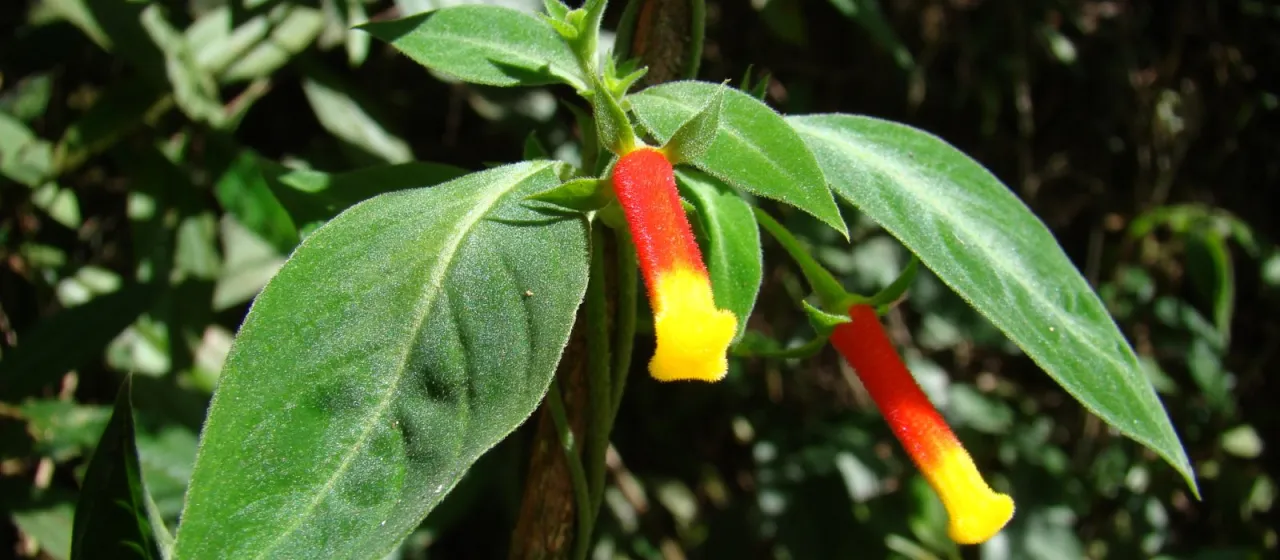
Manettia luteorubra, commonly known as the firecracker vine, is an evergreen climbing plant belonging to the Rubiaceae family. It is widely recognized for its vibrant, tubular flowers that display a striking color gradient from fiery red at the base to yellow at the tips, making it a highly desirable specimen for ornamental horticulture.
The plant originates from the tropical regions of South America, specifically in the forests of Brazil and Paraguay. As a tropical species, it thrives in warm, humid environments where it uses its twining stems to climb towards the canopy. Outside of its native tropical climate, it is primarily grown as a greenhouse plant or a decorative container vine in temperate zones.
Botanically, the plant features glossy, opposite leaves and slender, flexible stems that exhibit vigorous growth. In a controlled environment, the plant requires a sturdy support structure to mimic its natural climbing habit. The root system is relatively delicate and requires well-aerated soil to remain healthy and productive throughout the growing season.
Cultivation requirements for Manettia luteorubra focus on replicating tropical conditions. It thrives in bright, filtered light and requires a consistent temperature range, ideally between 20°C and 25°C. The soil should be fertile, slightly acidic, and well-draining, as the plant is susceptible to root rot if left in saturated conditions for extended periods.
Best practices for plant maintenance include:
- Consistent watering, keeping the soil moist but never waterlogged.
- High ambient humidity, which can be maintained by regular misting or using a pebble tray.
- Balanced fertilization every two weeks during the active growth phase.
- Pruning back old stems after the blooming period to encourage new growth and denser foliage.
The plant is occasionally susceptible to pests such as spider mites and mealybugs, particularly when the surrounding air is too dry. Maintaining good air circulation and monitoring foliage regularly is key to preventing infestations. Primarily used for its aesthetic appeal, it is a staple in indoor gardening, conservatories, and temperate vertical garden designs.