
Description
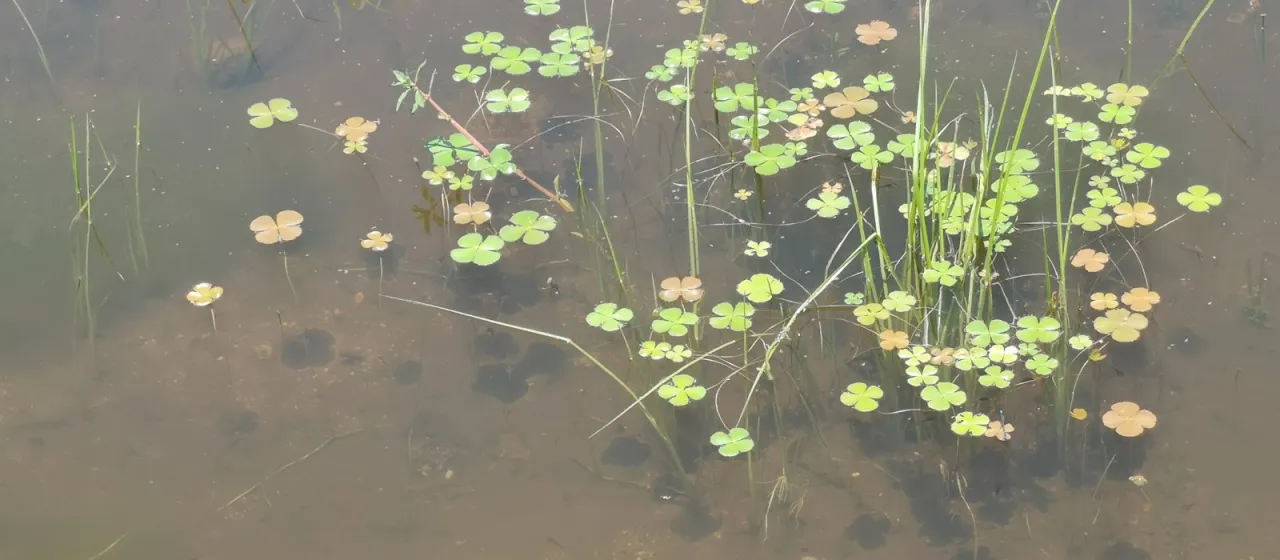
Marsilea macrocarpa, commonly known as water clover, is a perennial aquatic fern belonging to the Marsileaceae family. Despite its clover-like appearance, it is a true fern that reproduces via spores contained in hardened, bean-shaped structures known as sporocarps, which are buried in the mud or substrate.
The plant is native to the African continent, particularly regions with fluctuating water levels like floodplains and temporary pools. Its ability to tolerate periods of both total submersion and complete soil desiccation is a key evolutionary adaptation, allowing it to colonize challenging environments where other aquatic species might fail.
Botanically, it is characterized by a creeping rhizome that spreads horizontally across the substrate. From the rhizome, slender stalks emerge, terminating in four-leaf clover-like leaflets. In favorable conditions, these leaflets can either float on the water surface or stay submerged, creating a lush, dense carpet-like growth habit.
Cultivation requirements for Marsilea macrocarpa involve providing high light intensity to encourage low-profile, dense growth. It thrives in nutrient-rich, fine-grained substrates like clay or silt. While it is relatively hardy, consistent maintenance of water parameters and sufficient fertilization, including iron and micronutrients, is essential for maintaining deep green coloration and preventing yellowing of the fronds.
The agricultural and ornamental use of this plant is primarily focused on aquatic landscaping and hobbyist aquaria. It is highly valued as a foreground plant in aquascaping due to its rapid spreading ability and aesthetic appeal. While not a major food crop, it serves an important ecological role in its natural habitat as ground cover and a shelter for small aquatic organisms.
- Light intensity: Moderate to high (essential for creeping).
- Substrate: Nutrient-rich loam or aquatic soil mix.
- Propagation: Rhizome division.
- Pest/Disease control: Primarily prone to algal overgrowth; minimize via nutrient balance.