
Description
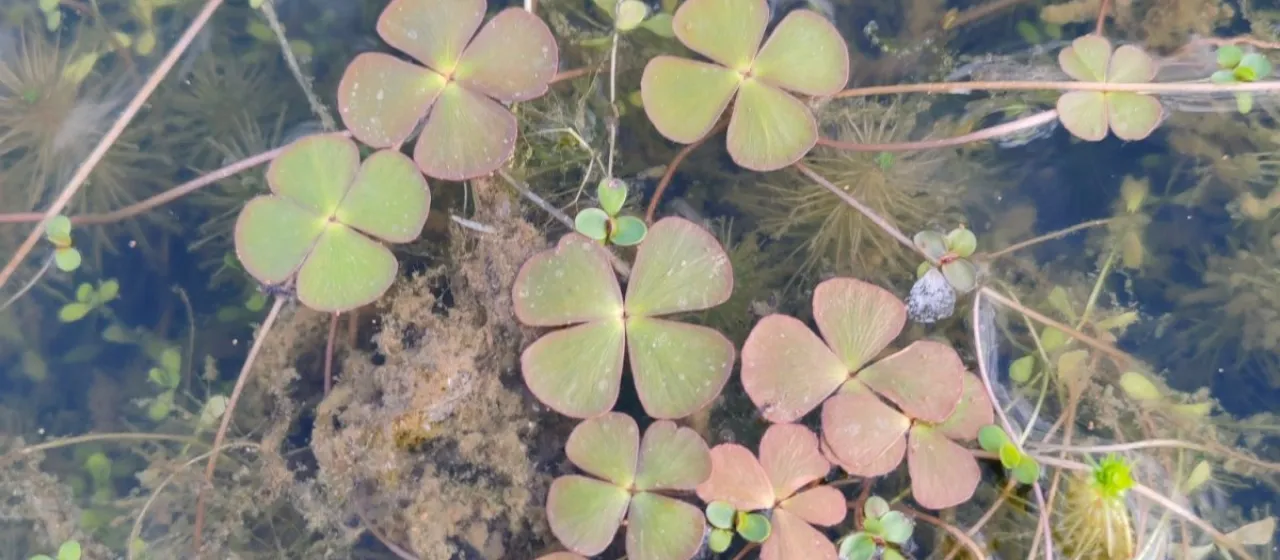
Water clover (Marsilea quadrifolia) is an aquatic fern belonging to the family Marsileaceae. Often mistaken for clover due to its four-leaflet leaves, this species is actually a heterosporous fern that reproduces via spores produced in specialized structures called sporocarps. It is characterized by its rhizomatous growth pattern, which allows it to spread rapidly across aquatic and riparian habitats.
The native range of this plant extends across temperate and tropical regions of Eurasia. It thrives in shallow freshwater habitats such as river margins, wetlands, and flooded rice fields. Its ability to colonize moist soils and shallow water makes it a resilient species, capable of surviving seasonal variations in water levels through the dormancy of its sporocarps.
Botanically, Marsilea quadrifolia exhibits significant morphological plasticity. When submerged, the petioles lengthen significantly, allowing the leaves to float or remain submerged, while terrestrial forms produce shorter, more robust stems. The characteristic four-part leaf design is an adaptation that maximizes photosynthetic efficiency in varying light conditions.
Successful cultivation requires specific environmental conditions. The plant prefers nutrient-rich silt or clay-based substrates and requires high levels of ambient light. While it is tolerant of a range of temperatures, it exhibits the best growth rates when water and soil temperatures remain between +20°C and +26°C. Consistent moisture is the primary requirement, as the plant lacks the drought tolerance of land-based species.
In terms of хозяйственное (economic) utility, water clover is primarily used in landscaping for ornamental ponds and as a popular plant in the aquarium trade for creating foreground carpets. It is generally resistant to most pests; however, in stagnant or overly polluted waters, it may be susceptible to root rot or infestation by aphids. Effective management involves maintaining water circulation and periodically thinning the stand to prevent excessive overcrowding.