
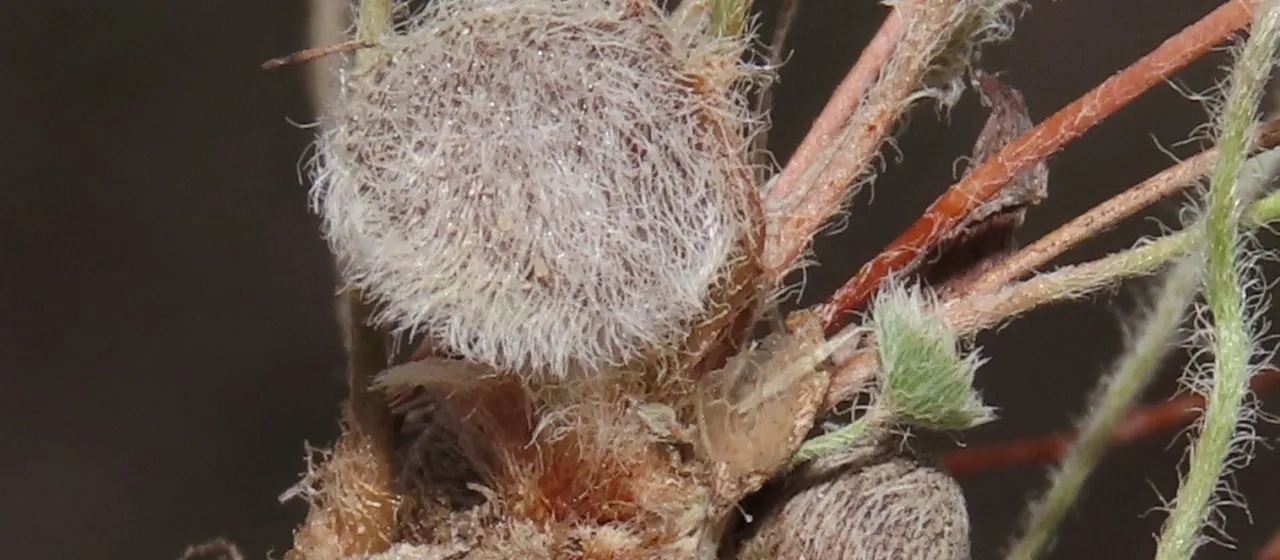
Description
Hairy water clover (Marsilea vestita) is a unique perennial aquatic fern belonging to the family Marsileaceae. While it superficially resembles a four-leaf clover, it is technically a spore-bearing pteridophyte that has evolved to thrive in ephemeral aquatic environments, displaying remarkable resilience to fluctuating water levels.
The species is native to North America, where it naturally inhabits seasonal pools, muddy shorelines, and periodically flooded grasslands. Its natural distribution spans a wide range of climates, demonstrating the plant's ability to survive both fully submerged aquatic phases and terrestrial desiccation through the formation of dormant sporocarps.
Botanically, the plant consists of creeping rhizomes that produce long petioles tipped with four narrow leaflets. These leaflets are highly plastic; their shape and size can change significantly depending on whether the plant is grown underwater or in moist soil. This adaptation allows the species to maintain its physiological functions across a spectrum of hydration levels.
Agrotechnical requirements for successful cultivation include a nutrient-rich substrate, consistent light availability, and moderate temperatures ranging from 20°C to 28°C. When cultivated for decorative or restoration purposes, it is essential to manage water depth carefully. Although it can tolerate drying out, consistent moisture or shallow submersion is preferred for optimal growth rates and vegetative spreading.
The primary economic use of Marsilea vestita is in the aquarium trade and aquatic landscaping. It is highly valued as a foreground plant for creating dense carpets in freshwater tanks and artificial ponds. Potential pests include various species of herbivorous aquatic snails and aggressive algae growth, which can outcompete the fern for nutrients if the environmental balance is not properly maintained.