
Description
Medinilla cumingii is a distinguished evergreen epiphytic shrub belonging to the Melastomataceae family. Renowned for its significant ornamental value, this species is highly sought after by botanical gardens and specialized collectors. In an agricultural context, it is categorized as a high-value greenhouse crop that requires precise environmental control for successful development.
The plant originates from the tropical rainforests of Southeast Asia, specifically endemic to the Philippines. In its native habitat, it thrives as an epiphyte, colonizing tree bark and accumulating organic debris for nutrient uptake. Given its ecological background, the plant requires a controlled atmosphere that mimics high-humidity tropical environments to remain productive and healthy.
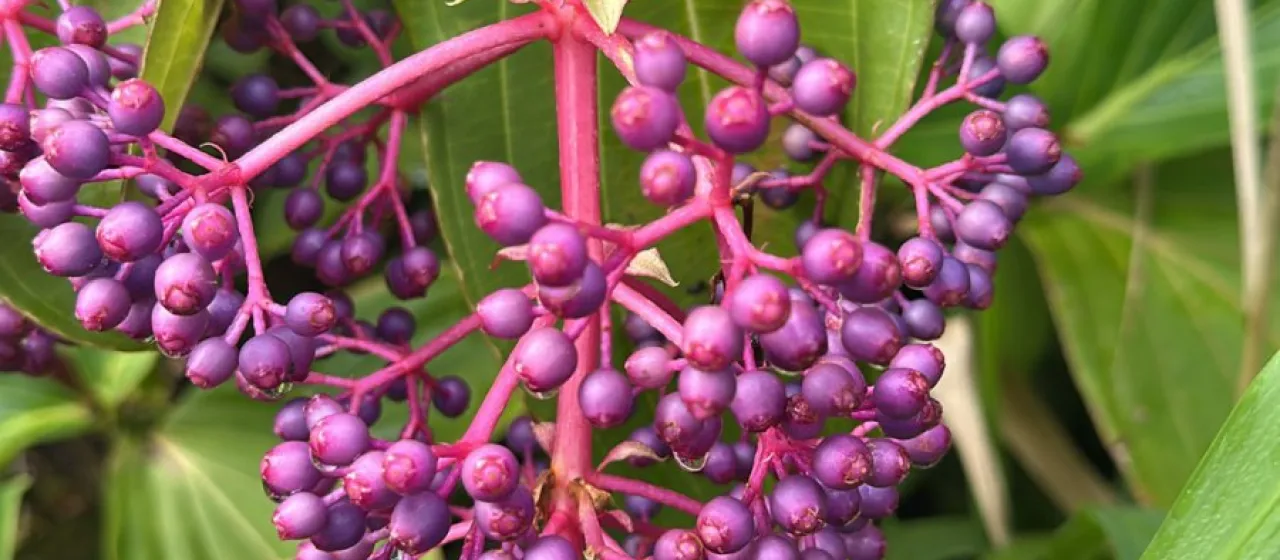
Botanically, it is characterized by rigid, four-angled stems and large, leathery leaves with prominent venation. The most striking features are the drooping panicles consisting of small flowers supported by colorful, showy bracts. Following the flowering phase, the plant produces fleshy berries that serve a key role in its natural reproductive cycle within the ecosystem.
Agrotechnical management of this crop centers on maintaining high ambient humidity levels and a stable temperature range between 20°C and 25°C. The substrate must be highly porous, consisting of coarse bark, perlite, and peat to prevent waterlogging. Consistent moisture is required, yet the root system is extremely sensitive to anaerobic conditions, making proper irrigation management a critical skill for growers.
The commercial application of Medinilla cumingii is limited to the floriculture and luxury plant trade. It serves as a flagship specimen for interior landscaping and botanical exhibitions. Producers must be vigilant against common challenges that impact the yield and aesthetic health of the plant, including:
- Infestations by scale insects and spider mites in dry environments.
- Root rot development resulting from poorly aerated potting media.
- Nutrient deficiencies, particularly iron or magnesium, which appear as leaf chlorosis.