
Description
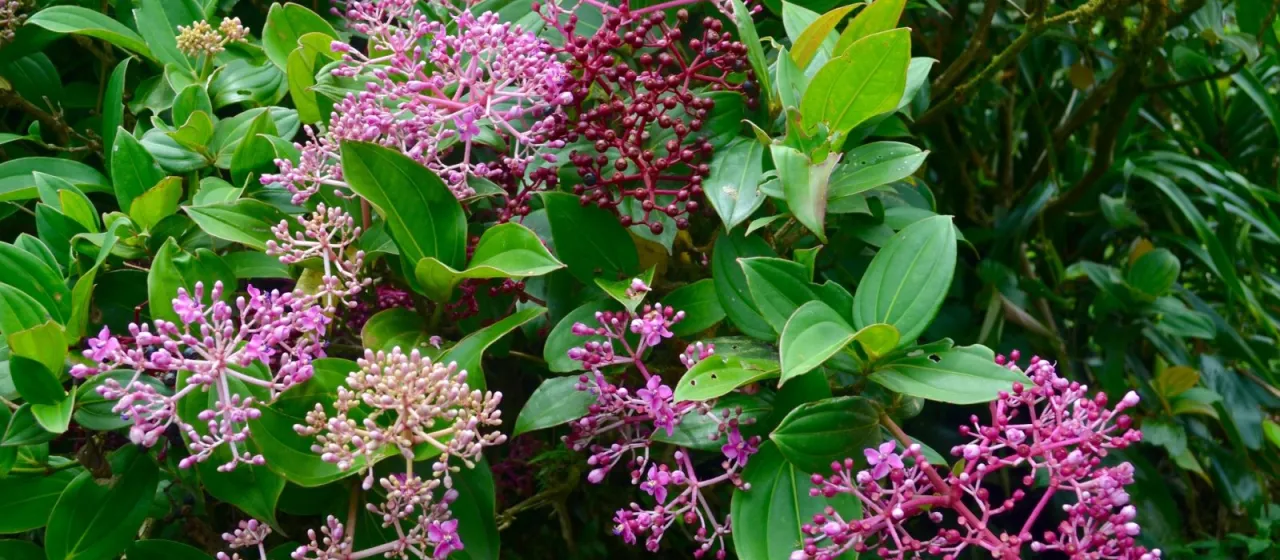
Medinilla myriantha is an exotic evergreen shrub belonging to the Melastomataceae family. Renowned for its elegant, cascading flower clusters and deep green leathery foliage, it stands out as a premium ornamental plant. While closely related to other popular species in the genus, this specific variety is appreciated for its prolific flowering habit and dense growth, making it a favorite in conservatory and greenhouse settings.
Native to the tropical rainforests of Southeast Asia, particularly the Philippines, Medinilla myriantha grows naturally as an epiphyte. It thrives in high-humidity environments under the canopy of larger trees. Understanding this habitat is crucial for successful cultivation, as it dictates the plant's need for specialized light conditions and an airy, well-draining root medium that mimics the organic layer of the forest floor.
Botanically, the plant features opposite leaves with prominent longitudinal veins. The inflorescences are pendulous panicles consisting of small, vibrant rose-pink flowers. Unlike some other varieties, the reproductive structures are highly effective, often followed by decorative berries. The plant develops a robust root system that, while sensitive to rot, supports a vigorous vegetative growth phase throughout the year when conditions are optimal.
The agrotechnology for this species focuses on maintaining a tropical microclimate. It requires a temperature range of 20°C to 26°C and relative humidity levels ideally exceeding 70%. The potting substrate must be loose and acidic, typically composed of peat, coarse bark, and perlite to prevent compaction. Frequent but careful watering is required, ensuring that the roots remain moist without sitting in saturated, stagnant water.
Regarding health management, Medinilla myriantha is susceptible to common greenhouse pests, including scale insects, mealybugs, and spider mites, especially if the ambient air becomes too dry. Root rot is the primary physiological disorder, usually resulting from inadequate drainage or cold, wet soil conditions. Integrated pest management, featuring regular inspections and the maintenance of adequate ventilation, is essential to keep the crop healthy.
- Requires bright, indirect sunlight to thrive.
- Avoid overwatering during winter dormancy periods.
- Benefit from frequent misting or automated humidification systems.
- Needs specialized fertilizers designed for acid-loving tropical plants.
- Minimal tolerance for cold drafts or temperatures below 15°C.