
Description
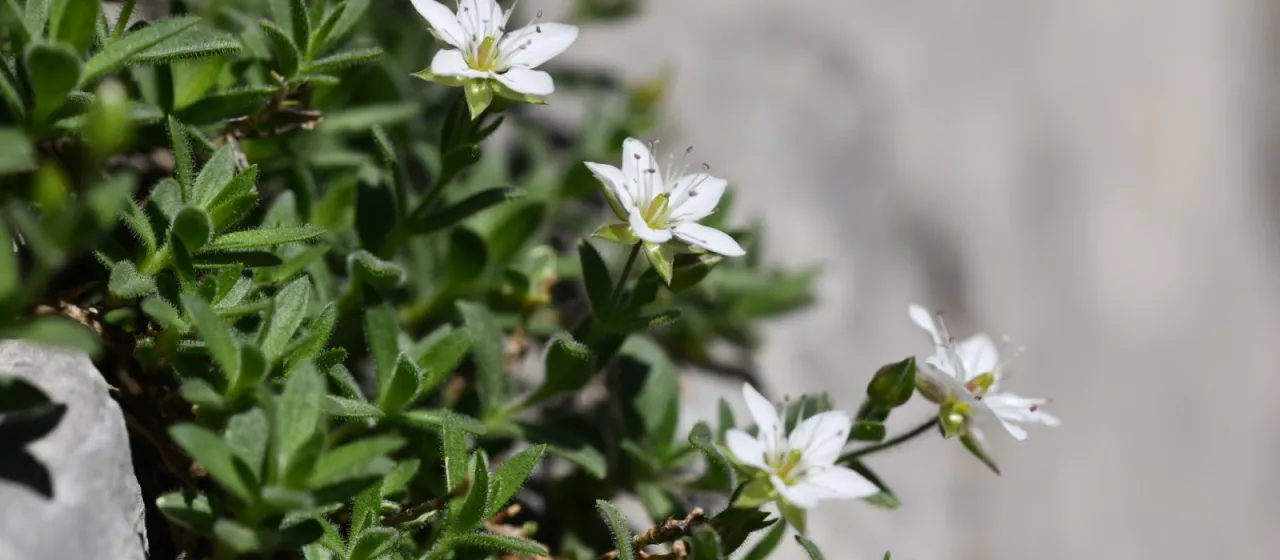
Minuartia cerastiifolia is a perennial herbaceous plant belonging to the Caryophyllaceae family. Known for its compact growth habit, it forms dense, low-growing cushions that are highly valued in horticultural practices, particularly for rock gardens and alpine displays where soil depth is limited and drainage is critical.
The species originates from Mediterranean regions, typically inhabiting rocky slopes and high-altitude areas. Its natural distribution is characterized by adaptation to harsh environments, where the plant thrives in thin, mineral-rich soils and withstands seasonal fluctuations in moisture availability, maintaining its physiological integrity under stress.
Botanically, the plant features linear to lanceolate leaves that often exhibit a pubescent surface, a structural adaptation to mitigate transpiration. The small, white flowers emerge on short peduncles during the late spring and summer months, effectively covering the foliage and creating a distinctive aesthetic display in managed landscapes.
Cultivation requirements for Minuartia cerastiifolia focus primarily on soil structure and sunlight. The species requires full sun exposure and an exceptionally well-draining substrate, such as sandy or gravelly loam. Gardeners must avoid overwatering, as poor drainage is the primary cause of root degradation and subsequent plant mortality in this genus.
The main horticultural use is as a decorative ground cover in xeriscaping or rockery designs. Disease management is usually minimal, provided that the plant is kept in dry conditions; however, growers should remain vigilant against common pests such as aphids or spider mites, which can manifest during periods of prolonged heat or water stress.