
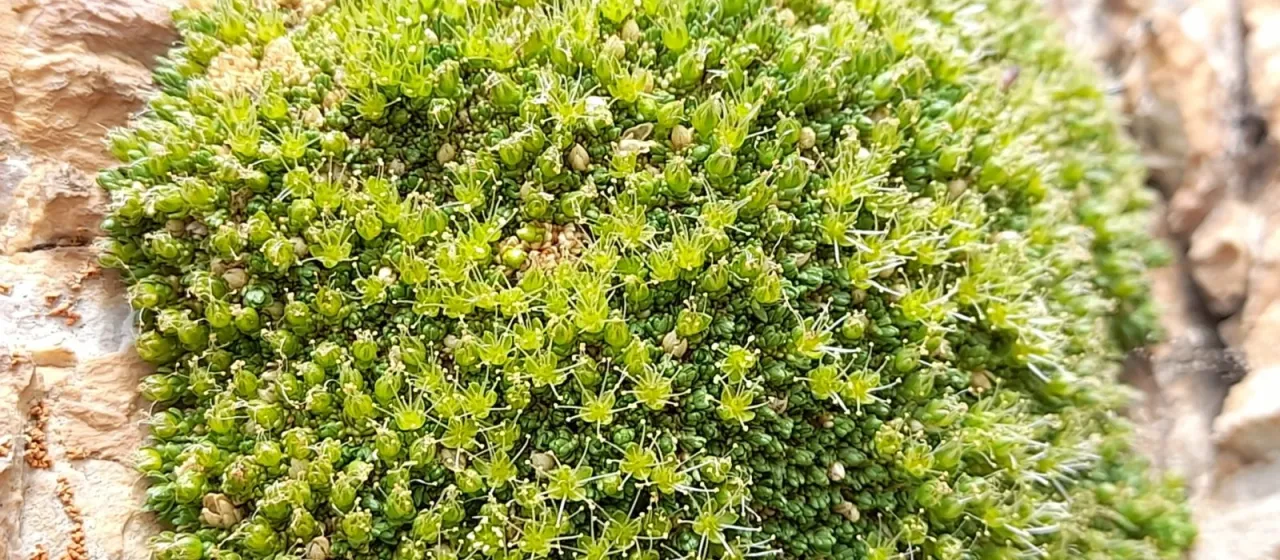
Description
Minuartia cherlerioides is a perennial herbaceous plant belonging to the Caryophyllaceae family. Known for its distinct cushion-forming habit, this species acts as a highly resilient organism capable of thriving in extreme environments, typical of high-altitude ecosystems across its native range.
The plant originates from the mountainous regions of Europe and Asia. Its natural habitat is defined by rocky slopes and scree, where it has evolved to occupy niches that are generally inaccessible to more sensitive species. This evolutionary adaptation makes it a unique candidate for specific horticultural applications.
Botanically, the plant displays dense, needle-like foliage organized into tight mats or cushions. During the reproductive phase, it produces small white flowers on short peduncles. These structures are designed to withstand high-velocity winds and temperature fluctuations common in alpine climates.
Agronomic requirements for Minuartia cherlerioides focus on excellent drainage and minimal soil fertility. Over-fertilization or excessive irrigation is detrimental to the plant’s health. Successful cultivation requires a mineral-based substrate that mimics rocky soil, ensuring that the root neck stays dry throughout the year.
- Requires full sun exposure for optimal growth.
- Prefers neutral to slightly acidic soil conditions.
- High tolerance to frost once established.
- Extremely vulnerable to root rot in waterlogged soils.
The primary use of this species is in alpine gardens and landscaping, where it serves as a slow-growing, ornamental ground cover. Typical plant health issues involve fungal infections related to moisture stress. Pest management primarily involves monitoring for root-feeding insects and mites in controlled environments.