
Description
Minuartia geniculata is a herbaceous plant belonging to the Caryophyllaceae family. Commonly known within its natural habitat as a hardy annual or short-lived perennial, this species is highly specialized for life in nutrient-poor and rocky environments where survival depends on high stress tolerance.
The native range of this plant is centered in the Mediterranean Basin. It is naturally distributed across Southern Europe, North Africa, and parts of Western Asia. It thrives in open, sunny locations such as limestone cliffs, rocky outcrops, and degraded grasslands, where it often forms dense, low-growing colonies.
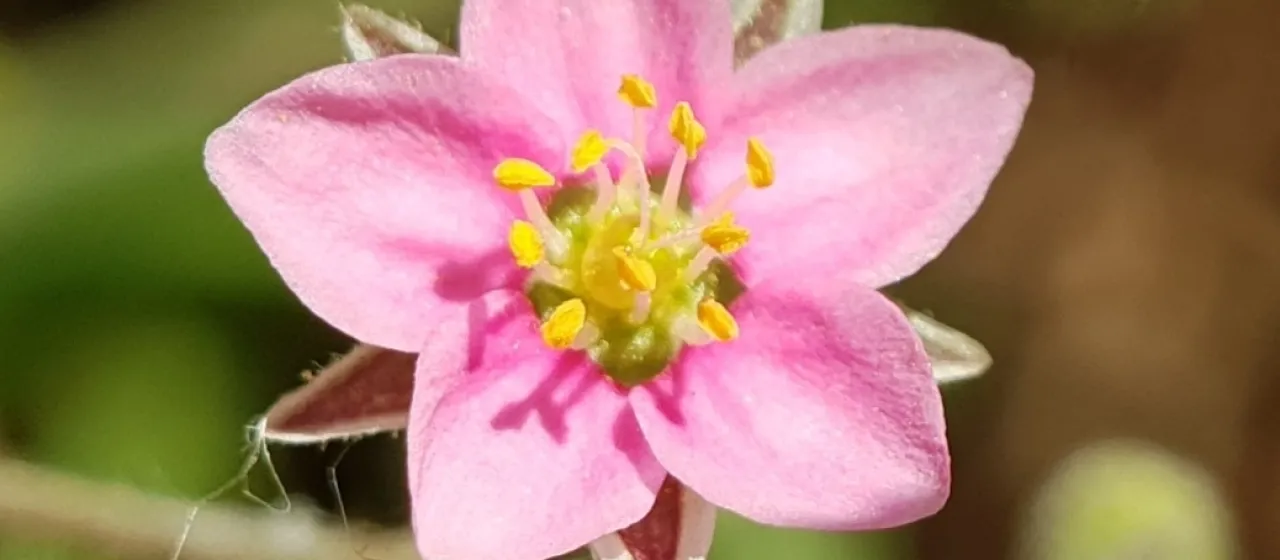
Botanically, the plant is distinguished by its geniculate (knee-like) stems, which provide structural support and a unique visual texture. The foliage is narrow and linear, arranged in a way that minimizes water loss through transpiration. During the blooming season, the plant produces delicate, small, star-shaped flowers that create a soft appearance against the rugged foliage.
Cultural requirements emphasize the necessity of gritty, well-draining soil. Minuartia geniculata requires full sun to maintain its compact growth habit and prevent etiolation. In terms of maintenance, it is remarkably drought-tolerant, requiring irrigation only during prolonged dry spells after initial establishment. Heavy fertilization should be avoided to prevent leggy growth.
In terms of utilization, it is a specialized crop for rock gardens and crevice planting. Its ability to colonize tight spaces makes it a valuable asset for alpine and Mediterranean-style garden designs. Typical pest threats include spider mites during hot, stagnant weather, while pathogens are primarily limited to root and crown rots resulting from inadequate soil drainage.