
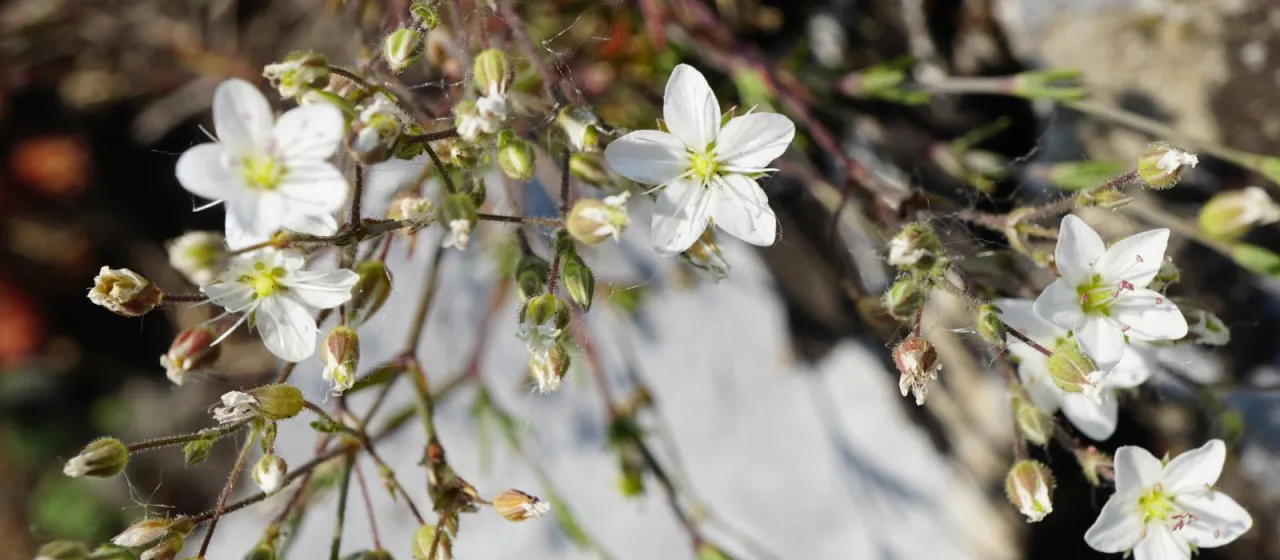
Description
Minuartia glaucina is a perennial herbaceous plant belonging to the Caryophyllaceae family. It is a compact, mat-forming species characterized by its adaptability to harsh environments, particularly in alpine and sub-alpine regions where soil conditions are often rocky and nutrient-poor.
The origin of this species is linked to the mountain ranges of Europe. Throughout its evolutionary history, it has developed mechanisms to survive in open, exposed rocky crevices. Because of these specific natural origins, the plant requires a highly specialized environment when brought into cultivation to mimic its wild habitat.
Botanically, Minuartia glaucina is recognized by its glaucous (bluish-grey) foliage and small, white, star-shaped flowers that appear during the growing season. The plant's root system is adapted to penetrate small fissures, allowing it to remain anchored and hydrated in environments where other plant species struggle to establish themselves.
From an agrotechnical perspective, successful cultivation depends entirely on the soil structure. It requires extremely well-drained, gritty substrates with a neutral or alkaline pH. Excessive moisture around the root zone is the primary cause of decline for this species, making site selection and drainage preparation the most critical aspects of its care.
In terms of usage, Minuartia glaucina serves as an excellent specimen for rock gardens, crevice plantings, and alpine troughs. It is valued for its ability to create a naturalistic, low-maintenance cover that is both aesthetically pleasing and ecologically appropriate for high-elevation or stony landscape designs. It is generally free from major pests when grown in well-ventilated, sunny conditions.
- Soil Type: Gritty, fast-draining.
- Sun Exposure: Full sun.
- Watering: Sparse, well-regulated.
- Landscape Use: Rockeries, crevice planting.