
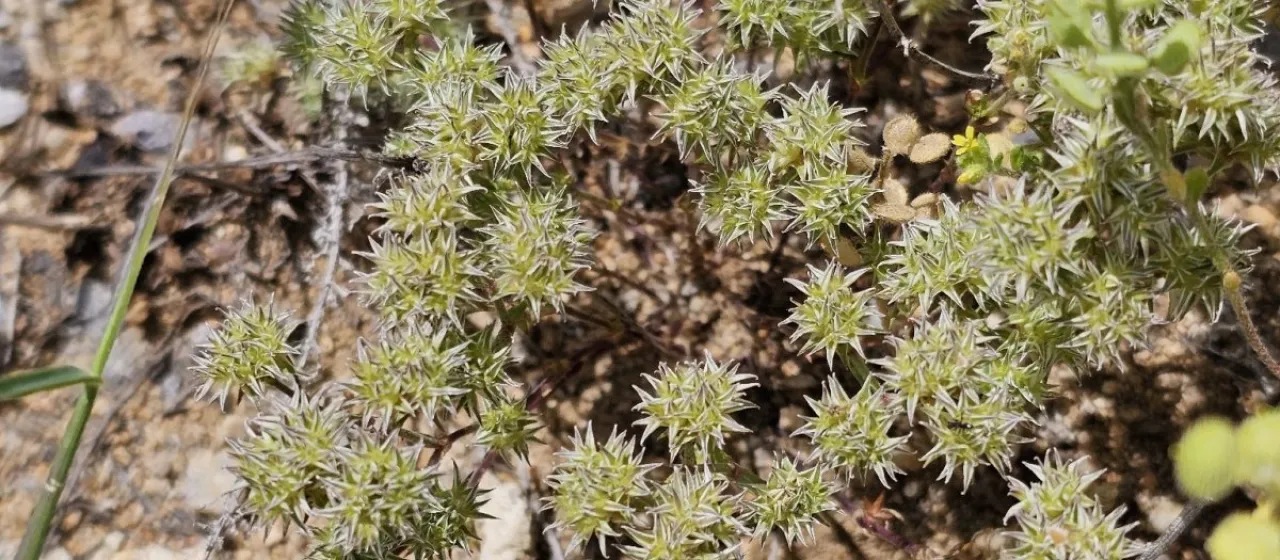
Description
Spanish sandwort (Minuartia hamata), belonging to the Caryophyllaceae family, is a herbaceous annual plant found primarily in Mediterranean and surrounding arid regions. While not a conventional commercial crop, it plays an important role as a component of natural rangelands and semi-arid ecosystems.
The plant originates from the Mediterranean basin and the Middle East, thriving in environments characterized by rocky soils, sand, and dry slopes. Its ability to colonize nutrient-poor sites makes it a resilient species in specialized botanical niches within agricultural landscapes.
Botanically, it features slender, branching stems and narrow leaves. The inflorescences are composed of small, delicate white flowers that appear during the spring season. The plant's morphology is adapted for rapid completion of its life cycle, allowing it to survive before the onset of extreme summer heat.
Regarding climate and soil, Minuartia hamata requires full sun exposure and excellent drainage. It does not tolerate waterlogging or high soil salinity. In terms of agronomy, no specific cultivation protocols are established for this species, as its role is limited to being a wild-growing forage component for local livestock grazing.
- Adaptation to rocky and nutrient-poor terrain.
- Low water requirements during the vegetative stage.
- Support of local biodiversity in pastoral zones.
Like many species within the Caryophyllaceae family, Spanish sandwort is susceptible to common fungal pathogens such as powdery mildew in dense populations. Pests typically include various aphids and small beetles that feed on the soft tissues of the plant, especially when environmental stress weakens the individual specimens.