
Description
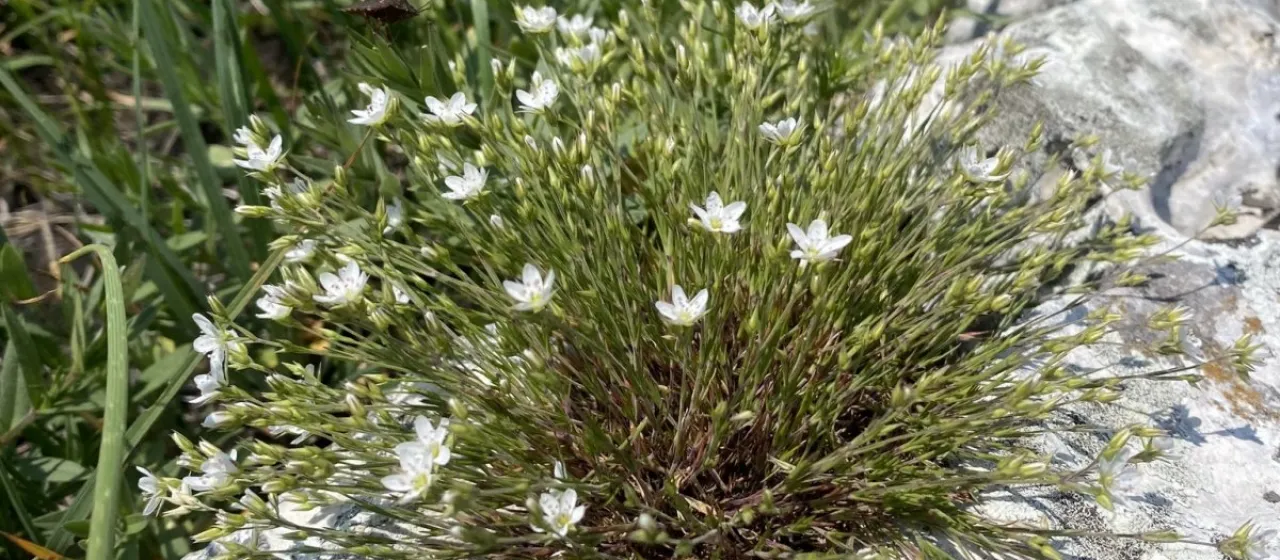
Hairy sandwort (Minuartia hirsuta) is a perennial herbaceous plant belonging to the Caryophyllaceae family. In agricultural and horticultural contexts, it is primarily recognized for its role as a low-growing ground cover that thrives in rocky or sandy environments, forming dense, cushion-like mats.
The native habitat of Minuartia hirsuta is centered in the mountain regions of Southern and Eastern Europe. Adapted to harsh mountainous conditions, it is highly resilient, successfully colonizing limestone substrates and rocky screes where many other plant species fail to establish growth due to nutrient-poor soils.
Botanically, the plant is characterized by its small, pubescent leaves arranged in rosettes and slender stems producing delicate white, five-petaled flowers. The hairy surface of the foliage serves as an evolutionary adaptation to reduce water loss, allowing the plant to sustain itself in areas with high solar radiation and periodic water shortages.
Successful cultivation of this species requires meticulous attention to drainage. Hairy sandwort demands full sun exposure and gritty, well-draining soil that mimics its native limestone outcrops. Fertilizer applications should be kept to an absolute minimum, as excessive nutrients often lead to leggy growth and increased vulnerability to environmental stress.
- Primary choice for rock garden landscaping.
- Useful for xeriscaping in low-moisture environments.
- Ideal for crevice planting and container gardening.
- Provides soil stability on steep, rocky slopes.
The main challenges in maintaining Hairy sandwort involve preventing fungal infections, specifically root rot, which typically occurs if the plant is subjected to waterlogged conditions. Pests are rarely a major issue, but under poor growth conditions, spider mites can occasionally affect the vitality of the plant, necessitating standard integrated pest management practices.