
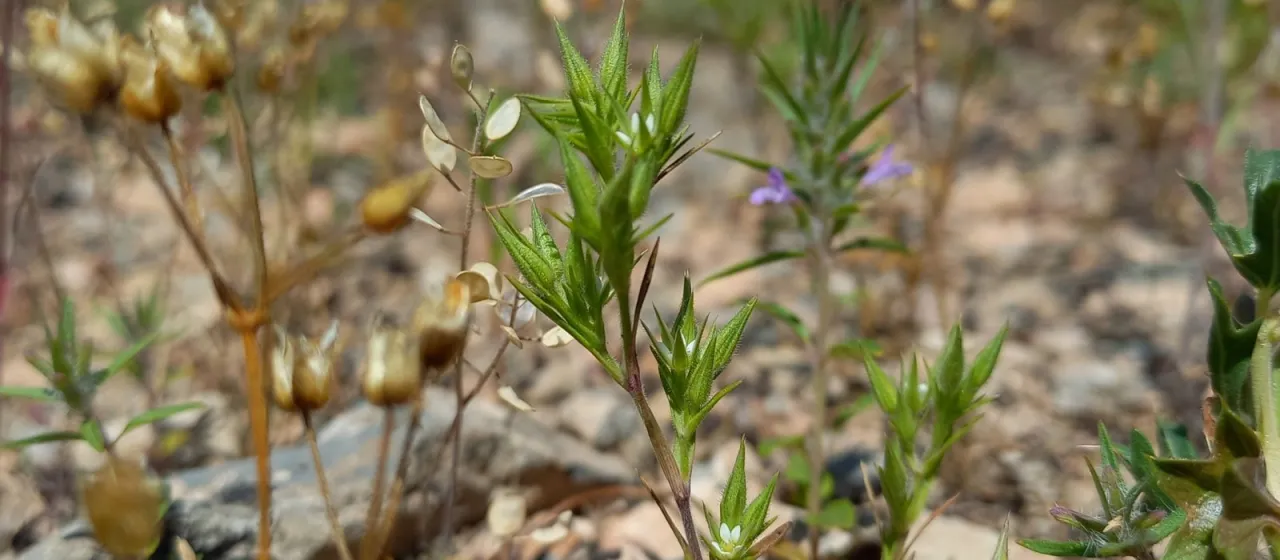
Description
Minuartia meyeri is a perennial herbaceous plant belonging to the Caryophyllaceae family. In agricultural and botanical contexts, this species is recognized for its adaptive capacity in mountainous and arid ecosystems. It functions primarily as an ornamental specimen, noted for its resilience and ability to colonize environments with poor soil structure and fluctuating temperatures.
The plant originates from the arid regions of Central Asia and the Caucasus, where it is found in rocky slopes and limestone outcrops. Its natural habitat is characterized by intense solar radiation and periodic moisture stress. Over time, the plant has evolved specialized physiological mechanisms to manage hydration and nutrient uptake in these nutrient-poor environments, making it a highly specialized perennial.
Botanically, Minuartia meyeri presents as a low-growing mat-forming plant with linear foliage. Its structure is optimized for minimizing transpiration, while the root system is fibrous and deep, allowing it to anchor securely in rocky substrates. During the flowering phase, it produces small, white, five-petaled blossoms that are ecologically significant for local pollinators in high-altitude environments.
Cultivation requires specific agronomic practices to ensure survival outside of its natural range. The primary requirement is superior drainage, as the species is highly susceptible to root rot in saturated conditions. It thrives in gritty, mineral-based soils with a near-neutral pH level. Supplemental feeding should be kept to an absolute minimum to prevent leggy growth and to maintain the plant's natural, compact aesthetic.
In practice, the plant is utilized extensively in rock gardens, scree beds, and as a low-maintenance ground cover in landscape design. Disease and pest pressure are generally low, provided that light and ventilation are optimized. The most common threats are fungal infections resulting from poor drainage or excessive atmospheric humidity; therefore, preventive care should focus on soil aeration and site selection that ensures optimal wind movement around the plants.