
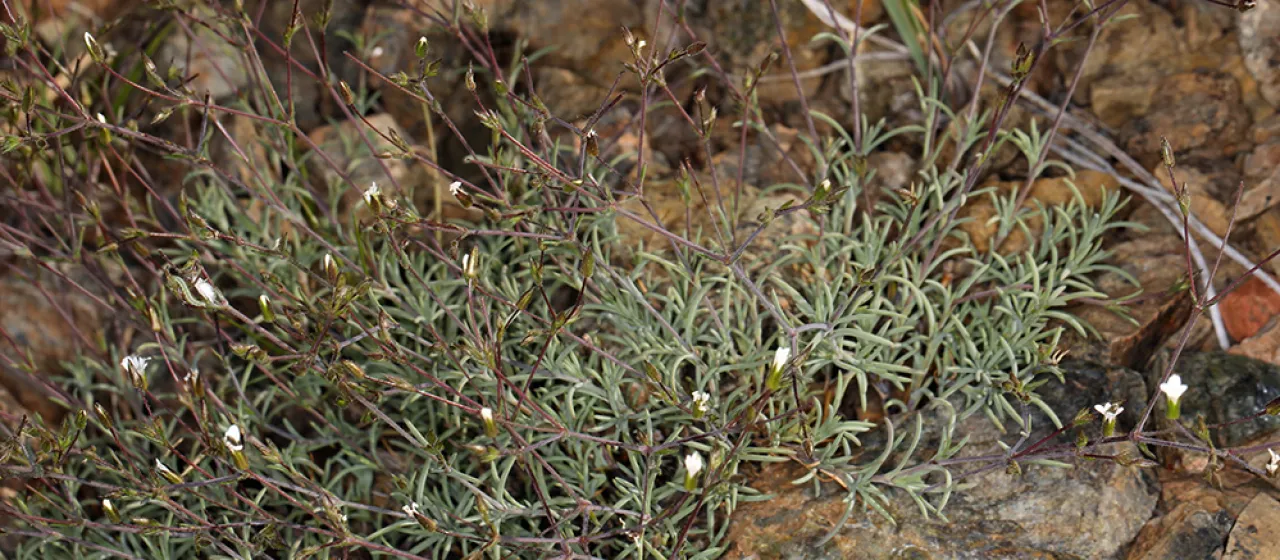
Description
Ross's sandwort (Minuartia rossii) is a perennial herbaceous plant belonging to the Caryophyllaceae family. This species is highly specialized, having evolved to thrive in harsh, nutrient-poor environments, making it a distinctive subject for botanists and specialized rock garden enthusiasts.
The origin of this species is rooted in the arctic and alpine regions of North America, particularly across high-latitude landscapes. Its natural distribution includes rocky tundra areas, scree slopes, and well-drained gravel beds, where it demonstrates remarkable resilience against freezing temperatures and a very short growing season.
Botanically, Ross's sandwort is characterized by its cushion-forming growth habit, which allows it to trap moisture and insulate itself from harsh winds. The leaves are narrow and densely packed, minimizing transpiration. Its small, white flowers appear during the short peak summer, creating a subtle but charming display against its compact, green foliage.
Cultivation requirements are strict due to the plant's sensitivity to environmental changes. Successful growth depends on providing a lean, mineral-based soil with exceptional drainage. High light intensity is essential, and the plant should be protected from competition with faster-growing, aggressive plant species. Avoid organic-rich soils, as they can cause the plant to lose its characteristic compact structure.
The primary economic and horticultural utility of Ross's sandwort lies in its role as a specimen plant for specialized rock gardens and arctic plant collections. While not a conventional agricultural crop, its value in the nursery trade is increasing among collectors. Disease management focuses primarily on preventing fungal pathogens caused by stagnant moisture; pests are generally rare but can include opportunistic insects in glasshouse conditions.