
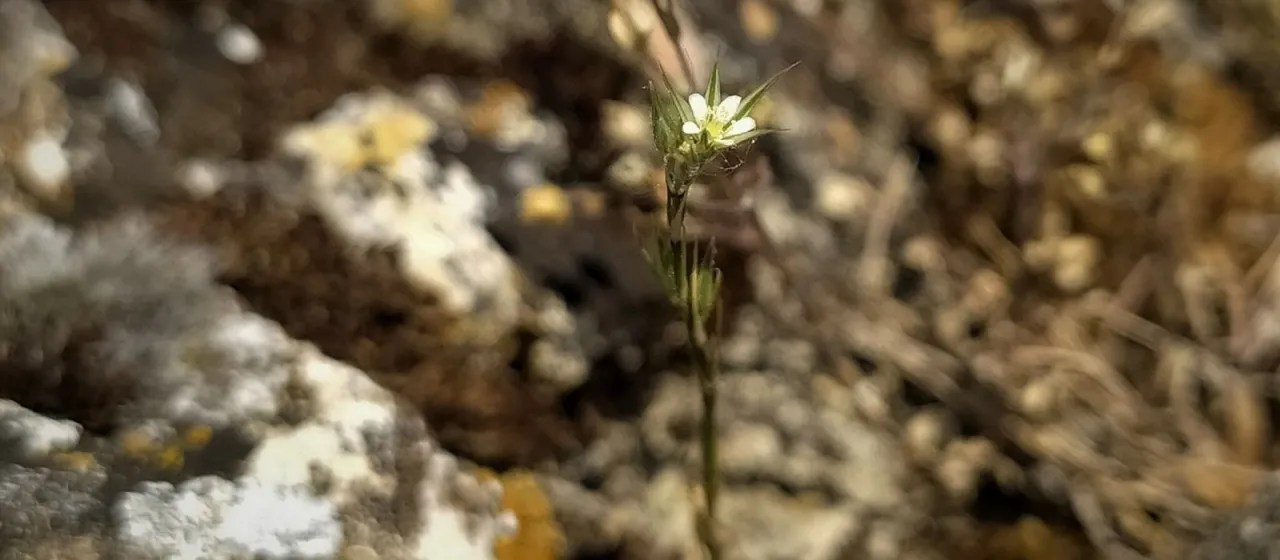
Description
The red sandwort (Minuartia rubra) is a perennial herbaceous plant belonging to the Caryophyllaceae family. This species typically grows as a low-profile plant, forming dense mats or patches. While not a conventional agricultural crop, it is of interest in botany and ecological landscaping due to its resilience and ability to thrive in challenging environmental conditions.
Originating from various parts of Europe and the Mediterranean, the species is widespread in habitats characterized by sandy, stony, or rocky terrain. It has adapted to survive in environments where nutrient availability is low and drainage is high. The natural range reflects its preference for open, well-lit areas where competition from taller flora is limited.
Botanically, it is defined by its slender stems and narrow, linear leaves. The flowers are relatively small but distinct, showing reddish or pinkish hues that distinguish it from related species. The root system is relatively shallow, which is common for plants adapted to stony substrates, allowing it to quickly absorb moisture during transient rainfall events.
Regarding cultivation and agronomy, the plant requires excellent drainage to remain healthy. It is highly sensitive to waterlogging, which often causes root rot and other fungal infections. The ideal soil is porous and nutrient-poor, mimicking its natural environment. It prefers full sun exposure and is highly tolerant to heat and drought once established in the ground.
Potential agricultural and horticultural uses include its application as a durable ground cover for rock gardens or as a stabilizer in areas subject to soil erosion. It is generally resistant to pests and diseases, provided the soil moisture levels are managed correctly. Common issues usually involve humidity-related pathogens, which can be mitigated through proper spacing and site selection.