
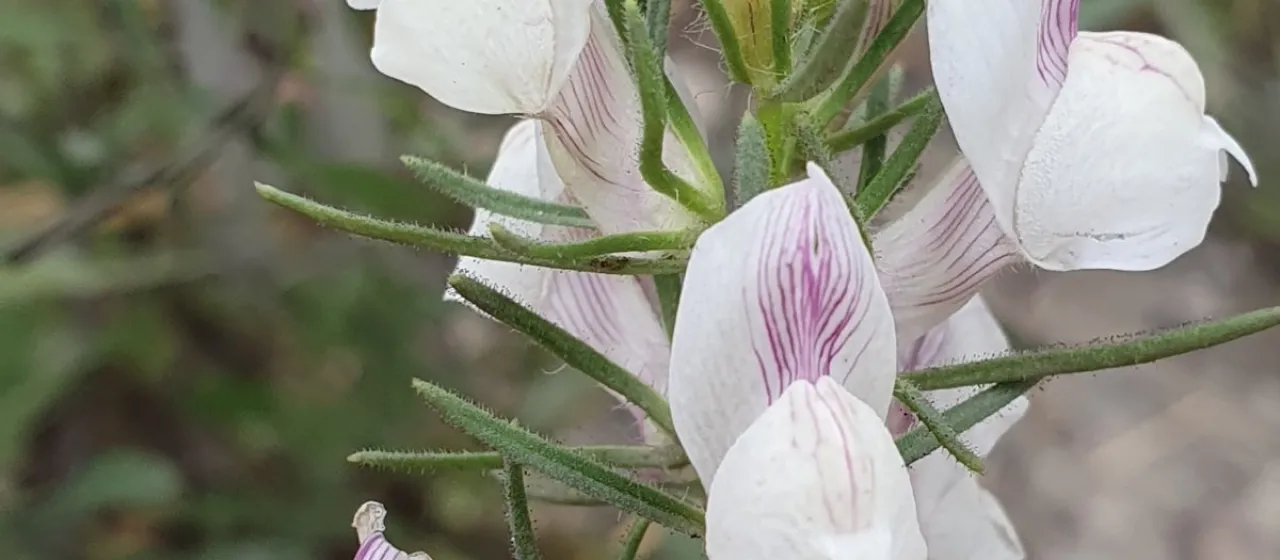
Description
Misopates calycinum is an annual herbaceous plant belonging to the Plantaginaceae family. It is morphologically similar to snapdragons, but distinguished primarily by its elongated, leafy calyx lobes that persist after flowering. As a botanical specimen, it is highly regarded for its unique morphological adaptations to its Mediterranean environment.
The plant originates from the Mediterranean basin and surrounding regions, where it thrives in temperate climates. It typically populates fallow lands, agricultural field margins, and disturbed soil sites. Its natural distribution is largely concentrated in Southern Europe and parts of North Africa, where it has evolved to survive in diverse soil conditions ranging from gravelly terrain to arable land.
Botanically, the plant features a glandular-pubescent stem and linear to lanceolate leaves arranged alternately along the axis. The flowers are zygomorphic, clustered in terminal racemes, with a distinct color palette that attracts local pollinators. Its fruit is a dehiscent capsule containing numerous small seeds, which are dispersed primarily by wind, ensuring the species' persistence.
Regarding cultivation and environmental requirements, Misopates calycinum prefers full sun exposure and well-drained, slightly calcareous soils. It is relatively drought-tolerant but performs best when soil moisture is managed consistently. In terms of agronomy, it is often viewed as a competitor in agricultural settings, requiring precise management to prevent its spread into primary crop fields.
Economically, this species is not typically grown as a cash crop, but it serves as a subject of interest in ecological studies of farmland biodiversity. Weed control strategies for this species involve shallow mechanical tillage and crop rotation programs. Despite its status as a minor weed, its botanical characteristics make it a significant plant for understanding the resilience of the Plantaginaceae family.
- Scientific classification: Plantae, Angiosperms, Lamiales, Plantaginaceae.
- Morphology: Glandular-hairy stem, zygomorphic flowers.
- Growth habit: Annual, erect.
- Primary habitat: Mediterranean fields and roadsides.