
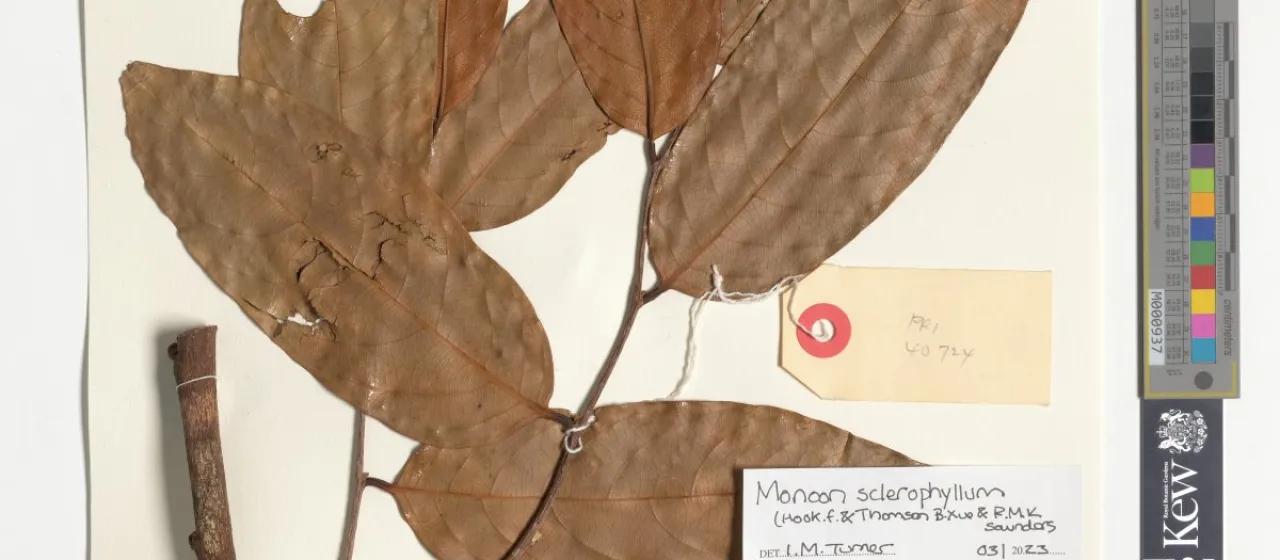
Description
Monoon sclerophyllum is a tropical woody species belonging to the Annonaceae family. This evergreen tree is characterized by its robust structure and sclerophyllous leaves, which provide significant drought tolerance and durability in its native forest habitats. It is a vital component of the complex tropical forest structure.
The plant originates from the tropical regions of Southeast Asia. Its geographical distribution is restricted to lowland and montane rainforests where stable temperatures and significant rainfall are consistent throughout the year. The species is adapted to thrive in competitive forest environments, often growing as a sub-canopy or canopy tree.
Botanically, the species exhibits a straight trunk and a dense, symmetrical crown. The leaves are leathery and typically oblong, showing clear signs of sclerophylly, which minimizes water loss. The flowers are generally cryptic, typical of the family, and produce multi-follicle fruits that contain seeds capable of germinating in the rich litter layer of the forest floor.
Cultivation requires specific environmental conditions, including deep, well-drained soils rich in organic matter. As a tropical species, it is intolerant of frost and dry spells.
- Soil pH should be maintained between 5.5 and 6.5.
- Consistent moisture is necessary, particularly during the first few years of establishment.
- Application of mulch helps in retaining soil moisture and suppressing weeds.
The economic value of this tree is localized, primarily serving the regional timber industry and forest restoration projects. Regarding pests and diseases, the tree is susceptible to tropical fungal pathogens if planted in waterlogged soils. Monitoring for boring insects is also recommended to ensure the structural integrity of the timber as the tree matures in a managed plantation setting.