
Description
Himalayan whorlflower (Morina longifolia) is an exquisite perennial plant belonging to the Caprifoliaceae family. Native to the Himalayan region, it thrives in high-altitude meadows and rocky slopes, reflecting its adaptation to challenging mountain environments at elevations of up to 4000 meters.
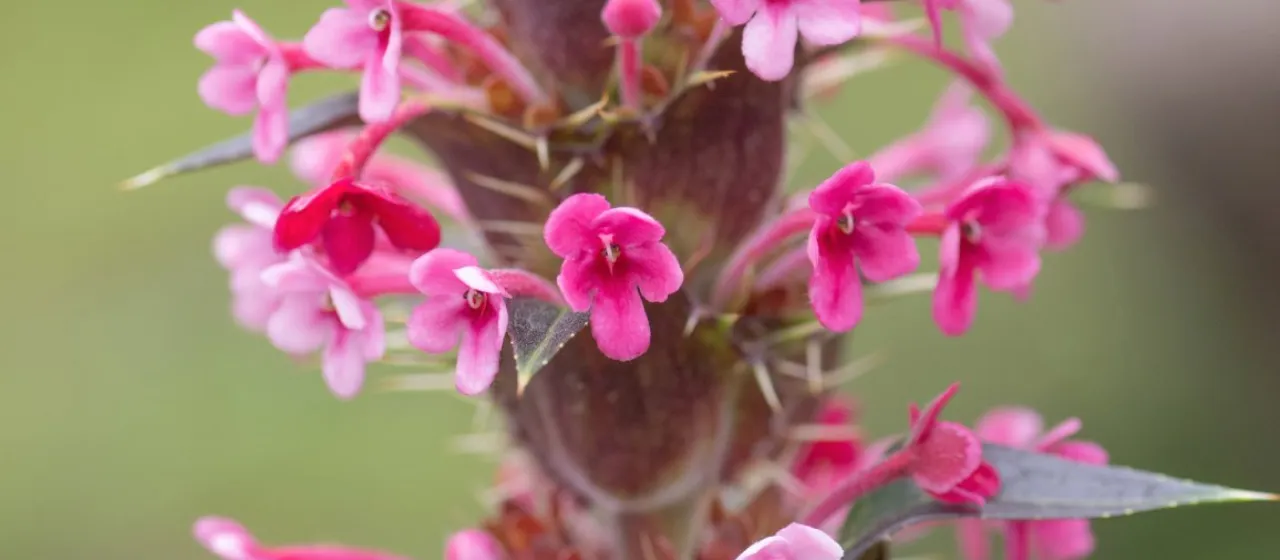
Botanically, the plant forms a rosette of leathery, thistle-like leaves with prickly margins. During the summer months, it produces tall, sturdy spikes that can reach heights of nearly one meter. The tubular, fragrant flowers are arranged in whorls, showcasing a striking color transformation from pale white or pink to a deep crimson as they mature.
To cultivate Morina longifolia successfully, a gardener must mimic its native alpine habitat. The primary requirement is exceptional soil drainage; the plant is highly susceptible to root rot if left in waterlogged conditions during winter. A gritty, neutral to slightly alkaline soil mix is ideal for supporting its deep taproot system and preventing fungal issues.
Agricultural and horticultural management should focus on minimal disturbance. Because the plant features a long, sensitive taproot, it should be planted in its final location as a seedling and left undisturbed. Maintenance includes routine weeding around the base, which should be mulched with gravel or stone chips to keep the collar of the plant dry and provide appropriate aeration.
The plant is mainly used in specialized garden designs, such as rock gardens, alpine beds, and Mediterranean-style landscapes. It is generally resistant to most pests, though aphids may occasionally colonize the flower spikes in dry weather. Disease management relies almost entirely on cultural practices, specifically the maintenance of excellent soil porosity to prevent the development of root pathogens.