
Description
Muehlenbeckia australis is a vigorous, woody climbing vine belonging to the Polygonaceae family. Known for its rapid growth rate and dense foliage, it is widely recognized for its ability to cover large structures or ground areas, providing a thick, lush green screen. This species is an essential component in environments where rapid establishment of greenery is required.
Originating from New Zealand, Muehlenbeckia australis has adapted to a diverse range of habitats, including coastal cliffs and forest margins. Its natural range reflects its resilience to variable environmental conditions, though it performs best in temperate climates where extreme frost is absent. Its hardiness makes it a reliable choice for landscaping in oceanic and mild-continental regions.
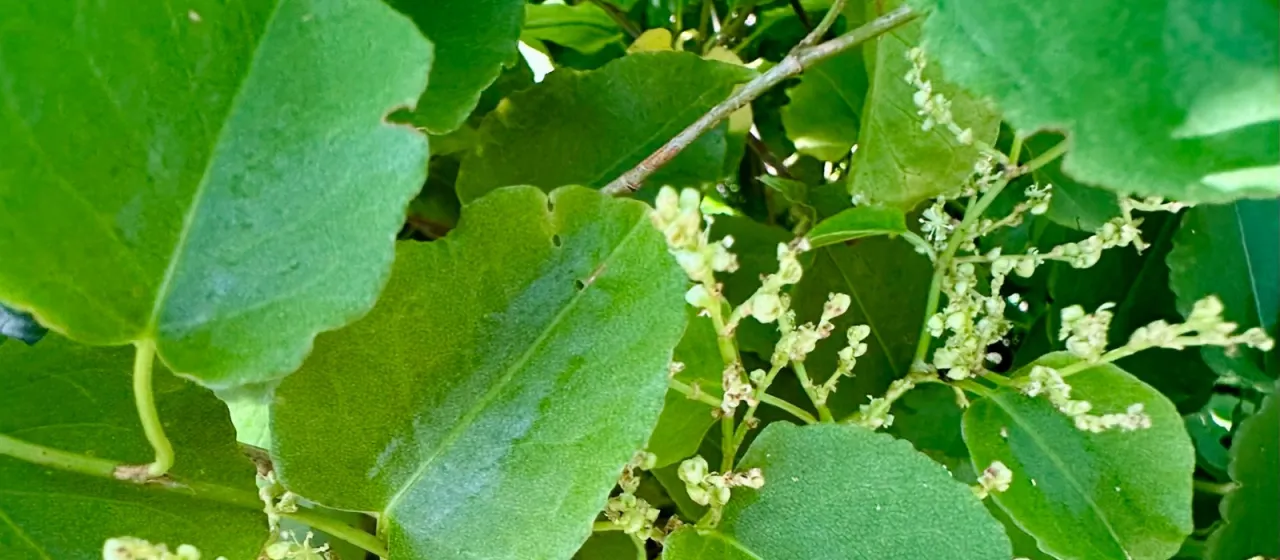
Botanically, the plant features flexible, reddish-brown stems that develop a woody texture over time. The leaves are typically heart-shaped or ovate with a glossy, deep green finish, which remains attractive throughout the growing season. It produces small, creamy-white flowers clustered along the stems, which eventually develop into succulent fruit that attracts local bird species.
For successful cultivation, Muehlenbeckia australis requires well-drained soil and a location with full sun to partial shade. While it is quite tolerant of various soil types, it performs best in nutrient-rich substrates. Proper management involves regular pruning, which is vital to prevent the vine from becoming invasive and to maintain a neat appearance on trellises or walls.
The plant is highly valued for its landscape utility, particularly in seaside gardens due to its tolerance to salt spray. It is generally resistant to major pests and diseases, though aphids and spider mites can occasionally cause minor damage in poor conditions. Ensuring good air circulation and appropriate moisture levels is usually sufficient to maintain the plant in excellent health.
- Rapid growth and excellent coverage.
- High tolerance to salty coastal air.
- Low maintenance requirements once established.
- Valuable for supporting biodiversity and bird life.
- Requires strict pruning to prevent overgrowth.