
Description
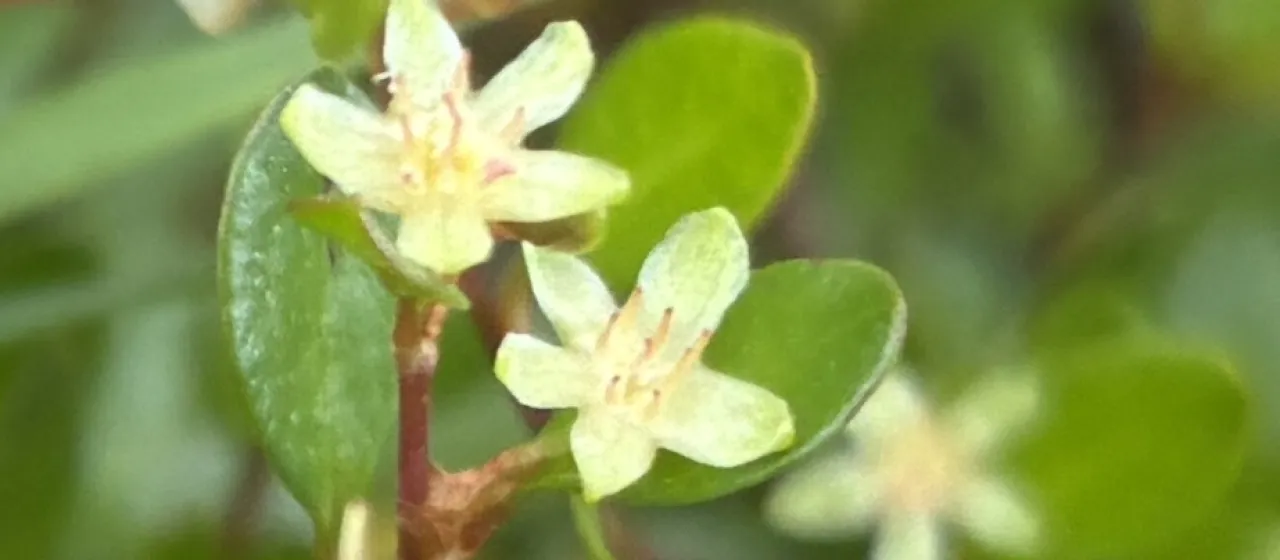
Muehlenbeckia axillaris, commonly known as creeping wire vine, is a robust, low-growing perennial plant belonging to the Polygonaceae family. It is widely recognized for its wiry, interlacing stems that spread horizontally to form a dense, carpet-like mat, making it an excellent choice for ground cover in various landscape settings.
Originating from the mountainous regions of New Zealand and Australia, this plant has evolved to thrive in challenging environments. It naturally inhabits rocky slopes and alpine meadows, which explains its inherent resilience to thin soils and its preference for sites with excellent drainage, where it can firmly anchor itself against erosion.
Botanically, it is classified as a prostrate subshrub. Its foliage consists of tiny, glossy, dark green leaves arranged along thin, dark brown stems. While the flowers are inconspicuous, the plant offers a distinct aesthetic appeal through its intricate texture and uniform growth habit, which remains evergreen in milder climates.
Cultivation requires minimal intervention. The species prefers full sun to light shade and thrives in well-drained, slightly acidic to neutral soils. It is remarkably drought-tolerant once established. Growers should avoid waterlogged conditions, as the root system is sensitive to prolonged moisture, which can lead to crown rot or fungal infections during dormant periods.
In terms of usage, it is highly valued for rock gardens, slopes, and as a filler between paving stones. Because of its vigorous but manageable growth, it is also frequently used in container gardening to create a cascading effect. Generally, it is rarely bothered by serious pests, though monitoring for aphids in warm, dry spells is recommended for optimal health.
- Hardiness: Suitable for temperate climates.
- Soil preference: Sandy, well-drained, rocky.
- Maintenance: Low; occasional pruning to control spread.
- Propagation: Easily grown from stem cuttings.
- Pests: Occasional susceptibility to aphids or spider mites.