
Description
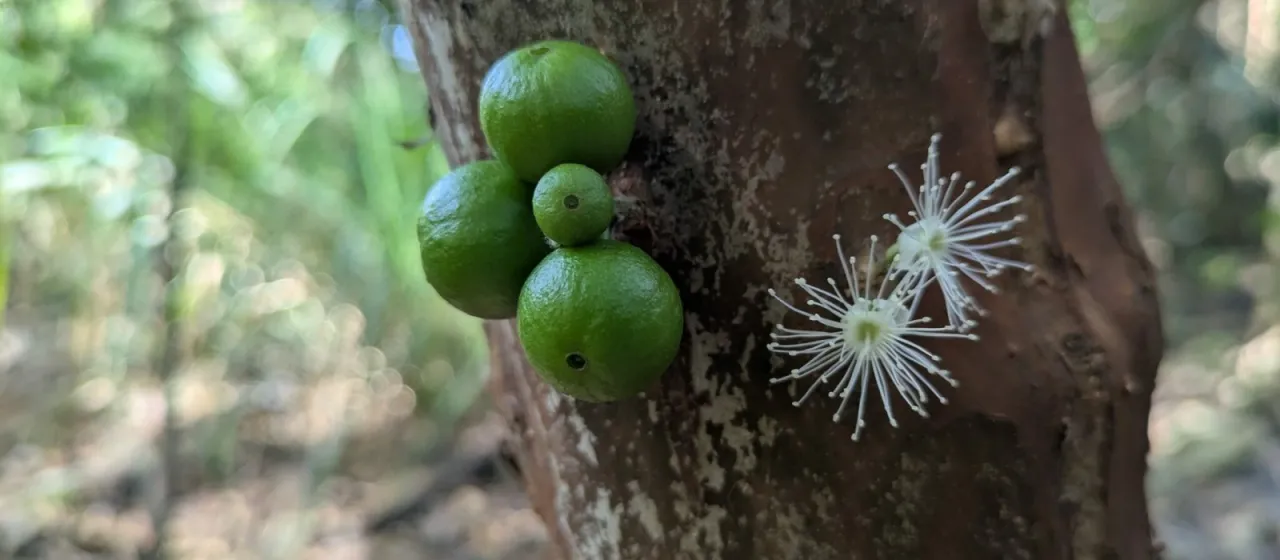
Jabuticaba (Myrciaria jaboticaba) is a unique evergreen fruit-bearing tree belonging to the Myrtaceae family. It is globally recognized for its fascinating trait of cauliflory, where flowers and subsequent fruits grow directly from the trunk and main branches rather than from stems or twigs, giving the tree a distinct appearance during the harvest season.
Originating from the tropical regions of South America, primarily Brazil, the plant is well-adapted to humid climates with consistent rainfall. While it thrives in its native environment, it has become a popular subject for both specialized commercial orchards in tropical zones and as a high-value ornamental or container plant in greenhouses and conservatories across the globe.
The tree grows at a very slow pace, typically reaching a height of 10 to 12 meters in natural conditions. Its foliage consists of dense, leathery, dark green leaves that provide an elegant look. The fruit is a spherical berry with a tough, purplish-black skin and a translucent, gelatinous pulp that contains one to four seeds, offering a sweet and pleasant flavor profile.
For successful agricultural production, Jabuticaba requires deep, rich, and well-drained acidic soil. It is notoriously sensitive to soil salinity and prolonged drought, requiring consistent moisture to maintain healthy fruit production. Because the plant is intolerant to heavy frost, it must be protected in temperate climates, making greenhouse cultivation the preferred method for northern regions.
Regarding pest and disease management, the tree is generally resilient but can be affected by scale insects, aphids, and spider mites. Fungal diseases often arise due to poor drainage or excessive humidity without proper air circulation. Maintaining a clean orchard environment and applying preventive horticultural practices are essential for sustaining high yields over the tree's long lifespan.