
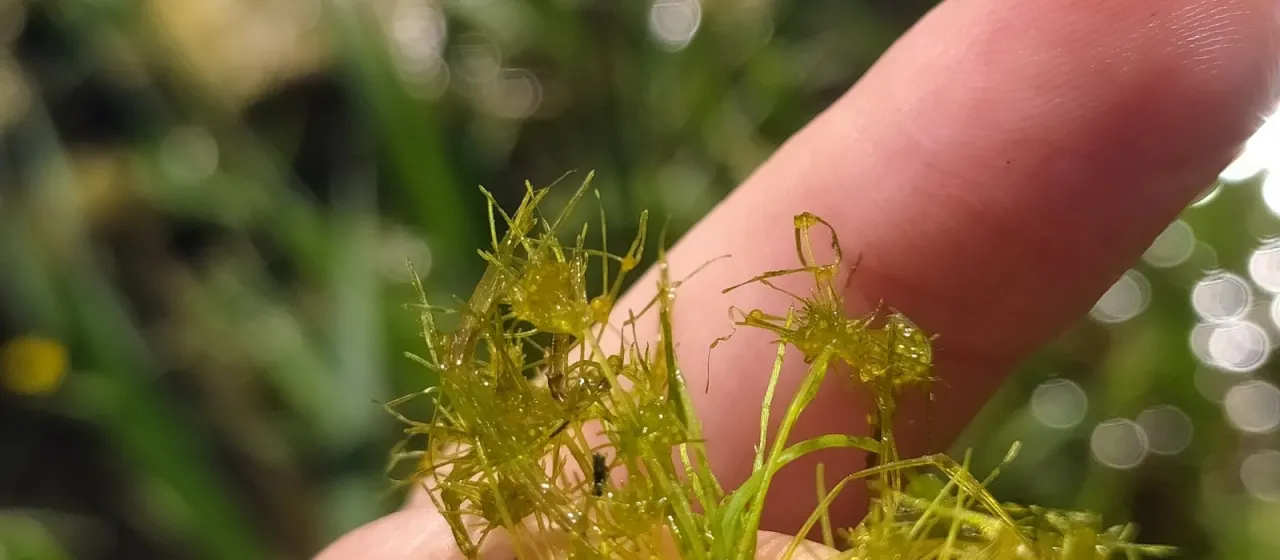
Description
Nitella capillaris is a species of charophyte green algae belonging to the family Characeae. Though often mistaken for higher plants due to its complex, stem-like structure, it remains a macroscopic alga that serves as a vital biological component in many freshwater systems, including those managed for aquaculture and agricultural water supply.
The distribution of this species spans across temperate regions of Eurasia. In an agricultural context, it is typically found in irrigation canals, farm ponds, and reservoirs. It prefers habitats with low turbidity and stable water levels, where it can firmly anchor itself to sandy or muddy substrates, effectively contributing to the stability of the aquatic environment.
Botanically, Nitella capillaris features a thallus composed of elongated internodes and whorls of slender, thread-like branchlets. Its cellular architecture, characterized by large cells with visible cytoplasmic streaming, has long made it a subject of intense scientific interest. Unlike vascular plants, it lacks xylem and phloem, relying on direct nutrient absorption from the surrounding water.
Regarding cultivation and environmental requirements, this species is highly sensitive to water quality. It flourishes in alkaline conditions with low concentrations of phosphates and nitrates. In farm ponds, maintaining high water clarity is essential, as the proliferation of phytoplankton or elevated nutrient runoff can lead to the rapid decline of this submerged vegetation.
The primary agricultural and ecological uses of Nitella capillaris include:
- acting as a natural bio-filter to sequester excess nutrients;
- providing a nursery and spawning ground for freshwater fish species;
- helping to stabilize pond bottoms through organic mat formation.
Common threats to its growth include chemical runoff from arable fields, increased water temperature, and physical disruption caused by mechanical weed harvesting. Effective management of agricultural water bodies requires minimizing the influx of agrochemicals to preserve populations of this ecologically significant alga.