
Description
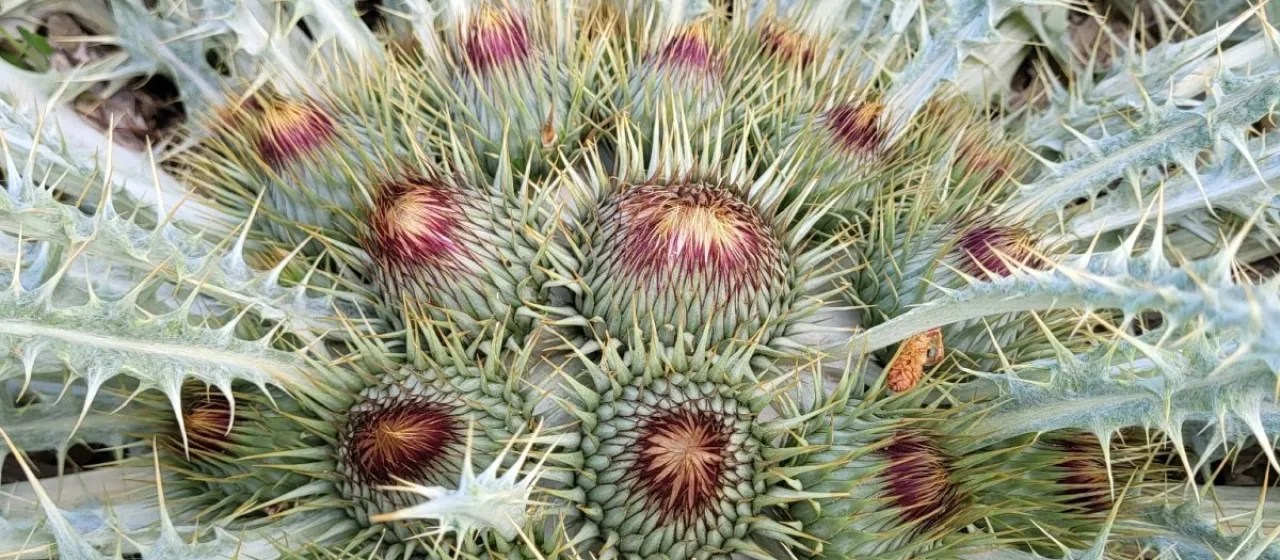
Onopordum acaulon L., commonly known as the stemless cotton thistle, is a perennial herbaceous plant belonging to the Asteraceae family. As the name suggests, the plant lacks a prominent stem, resulting in large, flowering heads that emerge directly from a dense rosette of spiny leaves close to the ground.
Originating from the Mediterranean basin and parts of North Africa, this species is well-adapted to arid and semi-arid environments. It thrives in open, sunny locations, often colonizing pastures, rocky slopes, and abandoned agricultural lands where it faces minimal competition from faster-growing species.
Botanically, the plant is characterized by its heavily dissected, silvery-green leaves covered in fine hairs, which help minimize water loss. The large, purple to pink flower heads are highly attractive to pollinators, providing a significant resource in dry habitats where other nectar sources may be scarce during the peak of summer.
Regarding cultivation and soil requirements, Onopordum acaulon is a true xerophyte. It prefers well-drained, sandy, or gravelly soils with a neutral pH. It is highly drought-tolerant and requires very little maintenance, though it does not tolerate waterlogged conditions or high humidity, which can lead to fungal infections in the root crown.
While often treated as an invasive weed in pasture management, the plant has potential uses in the production of seed oils. Typical pests include aphids and specialized weevils, while common diseases involve leaf spot and powdery mildew. Effective management relies on proper site drainage and avoiding overgrazing, which tends to favor the spread of this thistle.