
Description
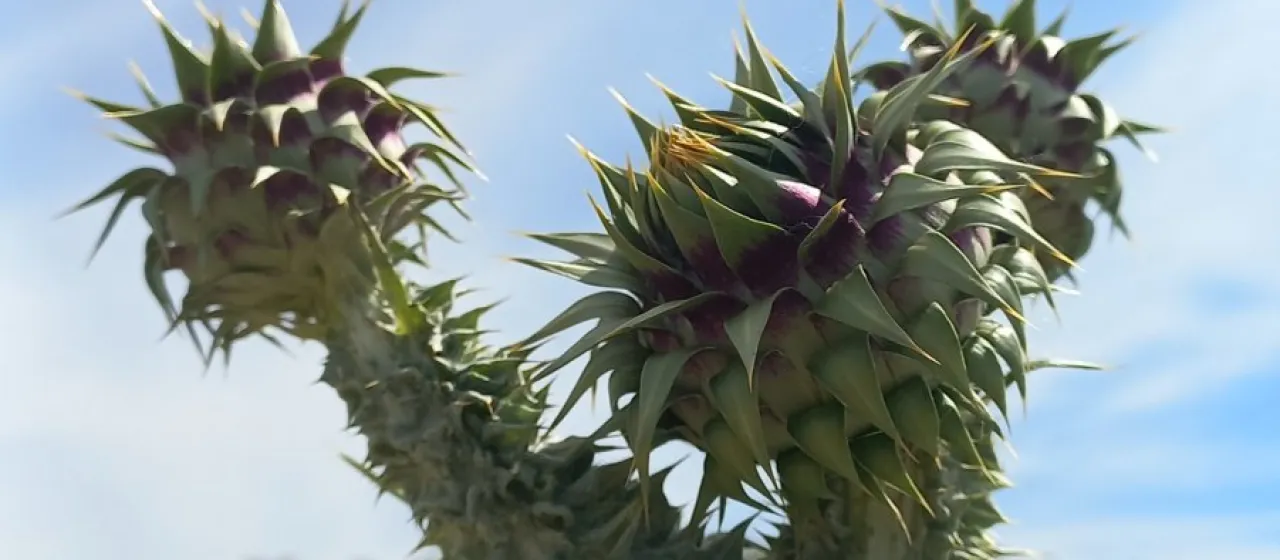
Illyrian cottonthistle (Onopordum illyricum L.) is a robust biennial plant species belonging to the Asteraceae family. In agricultural settings, it is valued primarily as a significant melliferous plant, although its vigorous growth habit can lead to it being categorized as a weed that requires careful management in commercial cropping systems.
The species is native to the Mediterranean basin and has naturally spread throughout various parts of Southern Europe and the Middle East. It thrives in well-drained, sunny environments, often dominating abandoned pastures and rocky landscapes. Its ability to tolerate low soil fertility and severe drought makes it a hardy species in challenging arid climates.
Botanically, this plant is characterized by its massive, branching stem reaching heights of up to 2 meters, covered in a dense, woolly tomentum. The leaves are deeply lobed and armed with sharp, stiff spines. The plant produces large, striking purple to reddish-pink flower heads that are highly attractive to bees and other pollinators, playing a crucial role in maintaining local insect populations.
Regarding its agronomy, the Illyrian cottonthistle requires minimal intervention. It thrives in soils with good drainage and exposure to full sunlight. For cultivation purposes, propagation is usually achieved via seeds. Weed management is critical; if control is necessary, practitioners should employ mechanical cutting or deep plowing before the plants reach the seed-setting stage to prevent unwanted spread.
- High drought tolerance
- Excellent nectar production for apiculture
- Provides habitat for beneficial insects
- Contains phytochemicals of potential medicinal interest
Beyond its ecological value, the plant has been historically utilized for its medicinal properties, including diuretic and tonic applications. In terms of protection, the crop is relatively resistant to diseases, although it may occasionally suffer from aphids or fungal infections such as rusts. Proper site selection and periodic monitoring of plant density are sufficient to maintain a healthy stand.