
Description
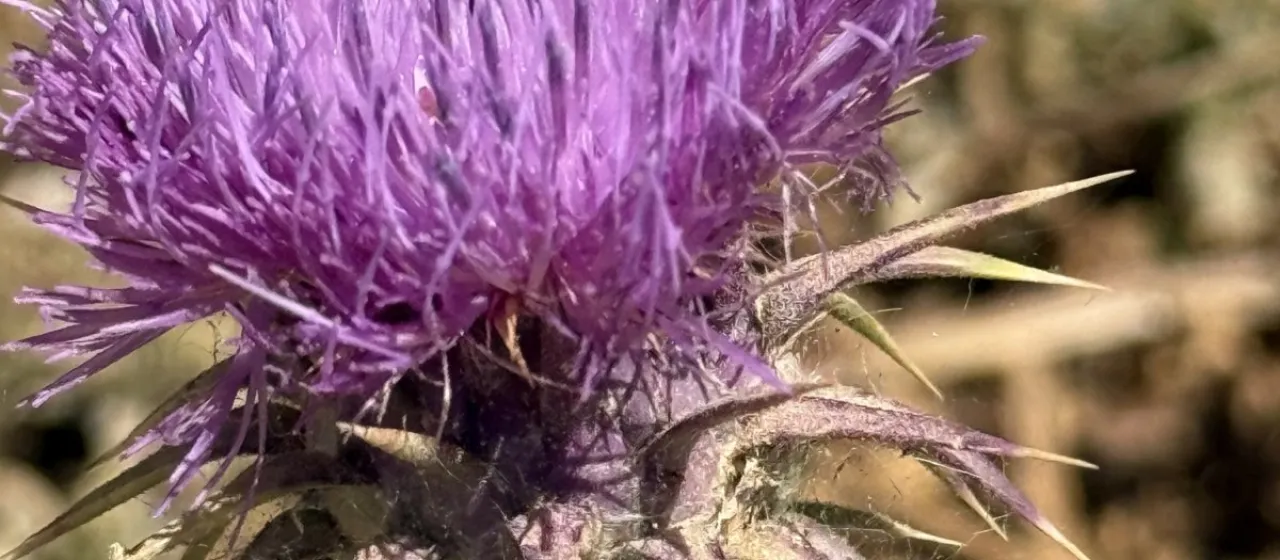
Tauric cotton thistle (Latin: Onopordum tauricum Willd.) is a biennial herbaceous plant belonging to the Asteraceae family. Often considered a weed in intensive farming, this plant is increasingly recognized for its ecological importance as a honey source and its potential in the pharmaceutical industry. Its height can reach up to two meters, characterized by a robust, thorny stem and distinct gray-green foliage.
The native range of the species extends across Southern Europe, the Crimean Peninsula, and the Caucasus region. It is highly adapted to dry, sunny environments and calcareous soils. This plant thrives in neglected fields, roadsides, and open pastures, demonstrating an exceptional ability to survive under heat stress and low precipitation, which makes it a resilient plant species in arid climates.
Botanically, the plant is distinguished by a deep taproot that allows it to access water reserves that are typically unavailable to smaller vegetation. During its second year, it produces large, globe-shaped purple flower heads. The surface of the leaves and stems is covered with fine, hair-like structures, which significantly reduce water loss through transpiration, providing a competitive advantage during hot summer periods.
Agricultural management requires attention to its invasive potential in neighboring crop fields. However, as a crop, it requires minimal soil preparation and no complex irrigation systems. Cultivation is best suited for marginal lands where other high-maintenance crops fail. Proper soil aeration and ensuring high exposure to sunlight are the primary factors for successful growth and high biomass production.
The primary economic value lies in its high honey production capability and chemical components found in its seeds. Pests that typically affect this crop include various species of aphids and Curculionidae (weevils), which can damage the flower buds. To maintain health, it is essential to manage fungal infections like powdery mildew, which can occur during periods of high humidity. Systematic monitoring and timely harvest are key to successful management.