
Description
Onosma echioides is a notable perennial herbaceous plant belonging to the Boraginaceae family. Known for its distinct adaptability to arid environments, it is a key species in xerophytic plant communities. It is often studied for its physiological mechanisms that allow survival in low-nutrient and high-light conditions.
The plant originates from Southern Europe and Western Asia, where it predominantly grows in rocky outcrops and dry mountainous slopes. Its natural distribution is widespread across the Mediterranean basin and Caucasian regions, reflecting its preference for high solar radiation and low competition from larger plant species.
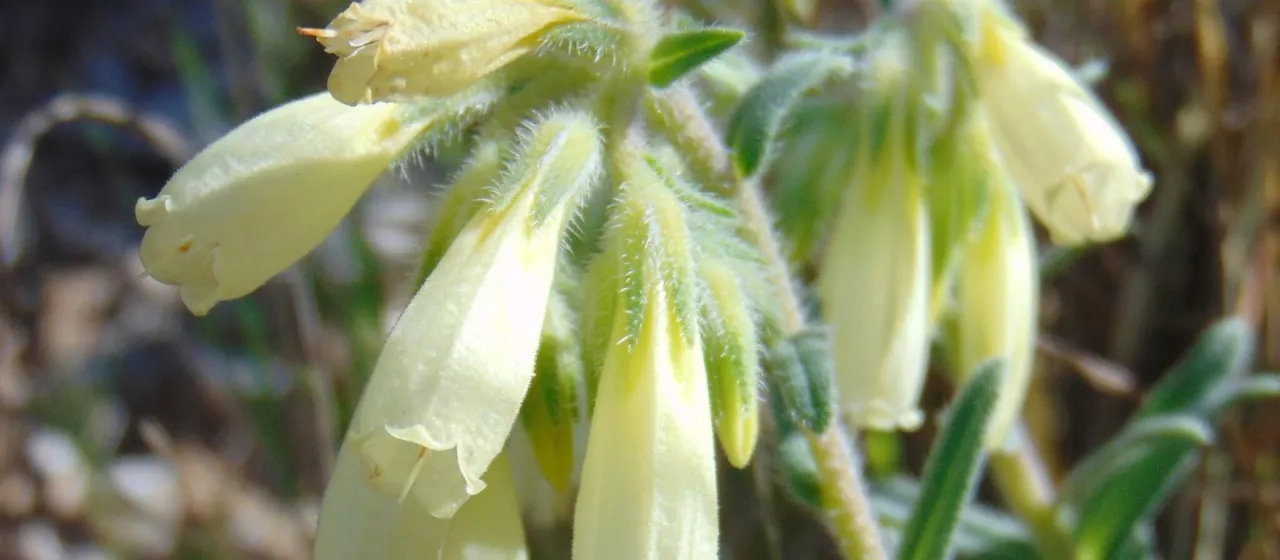
Botanically, Onosma echioides is characterized by a deep taproot and stems covered in stiff, coarse hairs that serve as a defense mechanism against herbivores and evaporation. Its leaves are narrow and lanceolate, while its flowers are typically tubular, drooping in clusters, and range in color from pale yellow to deep orange.
Agrotechnical management requires precise soil preparation, emphasizing superior drainage. The plant fails in poorly aerated or waterlogged conditions, which lead to rapid root decay. Ideally, it should be grown in rocky or sandy, calcium-rich soils with a neutral to slightly alkaline pH level to mimic its natural habitat.
The economic value of this crop is largely driven by its pharmacological applications. Roots of Onosma species contain active pigments and secondary metabolites known for their antimicrobial and anti-inflammatory properties. Typical issues in cultivation include sensitivity to crown rot caused by overwatering and the need for regular weeding, as the plant is a poor competitor against aggressive grasses.