
Description
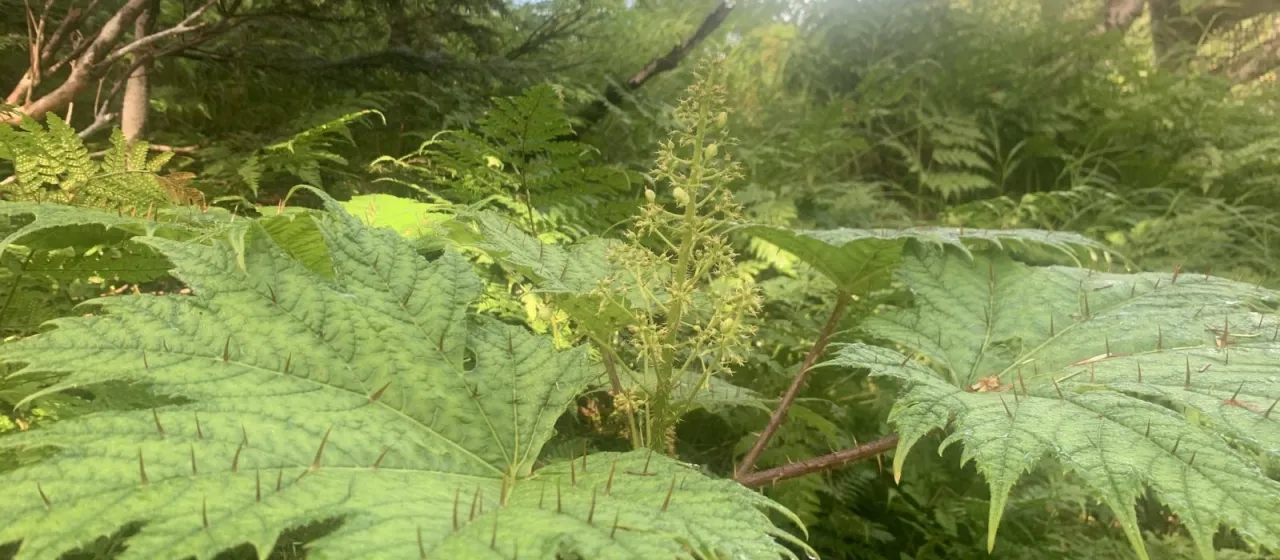
Japanese devil's club (Oplopanax japonicus) is a perennial shrub belonging to the Araliaceae family. It is closely related to better-known medicinal plants like ginseng and eleutherococcus. Characterized by its stout, prickly stems and large, palmate leaves, this plant is a striking example of the diverse flora native to the mountainous regions of Japan, where it thrives in humid and forested habitats.
The plant originates from the damp, shaded woodlands of Japan. It requires specific ecological niches to prosper, which makes it a demanding agricultural crop. As an adaptogenic herb, it has been traditionally used in local medicine for its restorative properties. In the agricultural sector, it is considered a specialty crop grown primarily for pharmaceutical research and small-scale cultivation for herbal extract production.
Botanically, the plant develops long-stalked leaves and produces clusters of small yellowish-green flowers, eventually bearing vibrant red berries. The root system is the most harvested part, as it is rich in bioactive compounds. Due to its slow-growing nature, the plant requires significant patience from the grower, as it takes several years to establish a productive root biomass suitable for extraction.
Agrotechnical requirements for Oplopanax japonicus focus on mimicking its natural forest floor environment. It prefers rich, acidic, well-draining soil and must be placed in a shaded area to avoid heat stress. Regular irrigation is essential, as the plant does not tolerate drought. Propagation is typically achieved through seeds, which often require cold stratification to break dormancy, or through carefully managed division of mature roots.
In terms of agricultural management, the plant is susceptible to various fungal pathogens if moisture levels remain unchecked, leading to root rot. Pests such as mites may infest the foliage in drier conditions. Implementing proper ventilation and monitoring soil moisture are critical steps for successful cultivation. Its primary utility lies in the development of health supplements and adaptogenic tinctures aimed at enhancing bodily resistance to stress.
- Thrives in partial to full shade
- Requires consistent soil moisture
- Contains medicinal secondary metabolites
- Distinctive spiny stem structure
- Slow growth rate typical for forest species